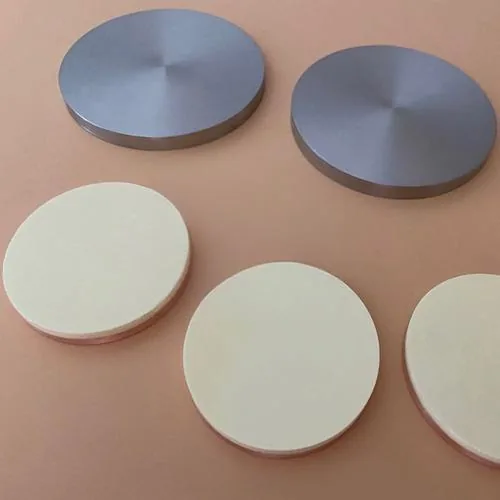
What is Ca0.6Li0.4O High-Li CLO Target: Solid-State Lithium Battery Interface Optimization
The Ca0.6Li0.4O (CLO) material represents an innovative approach to addressing critical interface challenges in solid-state lithium batteries. This calcium-lithium oxide compound with high lithium content is being investigated as a promising cathode material and interface optimization target for next-generation solid-state battery systems.
Material Characteristics and Synthesis
Ca0.6Li0.4O belongs to the family of calcium-based ceramic oxide materials that have shown potential for lithium battery applications [1]. The material features a unique composition with 40% lithium content, which is significantly higher than conventional cathode materials. This high lithium concentration contributes to:
- Enhanced lithium-ion transport properties
- Improved electrochemical performance
The synthesis of Ca0.6Li0.4O typically involves solid-state synthesis routines that ensure proper mixing and reaction of calcium and lithium precursors at elevated temperatures [1]. The resulting material exhibits ceramic-like properties with good thermal stability, making it suitable for high-temperature battery applications.
Interface Challenges in Solid-State Batteries
Solid-state lithium batteries face significant interface challenges that limit their performance and commercialization. These include:
- High interfacial resistance between solid electrolyte and electrode materials [2]
- Poor physical contact leading to limited active material utilization [3]
- Chemical incompatibility causing side reactions and degradation [4]
- Mechanical stress from volume changes during cycling [5]
- Space-charge layer formation at interfaces [6]
CLO as an Interface Optimization Target
The Ca0.6Li0.4O material addresses several of these challenges through its unique properties:
- Enhanced Ionic Conductivity: The high lithium content in CLO facilitates improved lithium-ion transport across interfaces, reducing interfacial resistance [1]. This is particularly important for solid-state systems where ionic conductivity at interfaces is often the rate-limiting step.
- Chemical Compatibility: Calcium-containing oxides have shown better chemical stability with various solid electrolytes compared to conventional cathode materials [1]. The Ca0.6Li0.4O composition minimizes undesirable side reactions at the cathode-electrolyte interface.
- Mechanical Properties: The ceramic nature of CLO provides good mechanical stability, helping to maintain physical contact with solid electrolytes during cycling [1]. This reduces the risk of contact loss due to volume changes in the electrode materials.
- Thermal Stability: Calcium-lithium oxides exhibit excellent thermal stability, which is crucial for high-temperature operation and safety in solid-state batteries [1].
Interface Engineering Strategies with CLO
Several interface optimization strategies can be implemented using CLO materials:
- Surface Modification: The surface of CLO particles can be engineered to create compatible interfaces with solid electrolytes. This includes coating with buffer layers or functional materials that enhance interface stability [7].
- Composite Formation: CLO can be combined with solid electrolytes to form composite cathodes that provide intimate contact and reduced interfacial resistance [8].
- Gradient Interfaces: Creating compositionally graded interfaces between CLO and solid electrolytes can minimize lattice mismatch and reduce space-charge effects [9].
- In-situ Interface Formation: During battery assembly or initial cycling, controlled reactions can be used to form stable interface layers between CLO and solid electrolytes [10].
Performance Benefits
The implementation of Ca0.6Li0.4O as a cathode material in solid-state batteries offers several performance advantages:
- Improved Rate Capability: The enhanced ionic conductivity at CLO interfaces enables faster charge and discharge rates [1].
- Extended Cycle Life: Better interface stability reduces degradation mechanisms, leading to longer battery lifespan [11].
- Higher Energy Density: The high lithium content contributes to increased specific capacity [1].
- Enhanced Safety: The thermal stability and chemical compatibility of CLO improve battery safety characteristics [12].
Current Research and Development
Recent research has focused on optimizing the synthesis parameters, particle morphology, and interface engineering of CLO materials. Advanced characterization techniques are being employed to understand the fundamental interface phenomena and guide material design [2,4,6].
The development of CLO-based solid-state batteries requires careful consideration of:
- Optimal lithium content for balancing capacity and stability
- Particle size and morphology control
- Interface engineering with different solid electrolyte systems
- Manufacturing scalability and cost-effectiveness
Future Perspectives
The Ca0.6Li0.4O high-Li CLO target represents a promising direction for solid-state lithium battery development. Future research should focus on:
- Understanding the fundamental interface mechanisms at atomic scales
- Developing scalable synthesis methods for CLO materials
- Optimizing interface engineering strategies for different solid electrolyte systems
- Integrating CLO materials into practical battery configurations
- Assessing long-term stability and degradation mechanisms
The successful implementation of CLO-based interfaces could significantly advance the commercialization of solid-state lithium batteries by addressing critical performance and safety challenges.
AtoZmat —— Advanced Materials from A to Z.
References
- Sathiyamoorthi, R.; Shakkthivel, P.; Vasudevan, T. New Solid-State Synthesis Routine and Electrochemical Properties of Calcium Based Ceramic Oxide Battery Materials for Lithium Battery Applications. Materials Letters 2007, 61 (17), 3746–3750. DOI: 10.1016/j.matlet.2006.12.027
- Guo, X.; Hao, L.; Yang, Y.; Wang, Y.; Lu, Y.; Yu, H. High Cathode Utilization Efficiency through Interface Engineering in All-Solid-State Lithium-Metal Batteries. Journal of Materials Chemistry A 2019, 7 (45), 25915–25924. DOI: 10.1039/c9ta09935b
- Nikodimos, Y.; Su, W.-N.; Taklu, B. W.; Merso, S. K.; Hagos, T. M.; Huang, C.-J.; Redda, H. G.; Wang, C.-H.; Wu, S.-H.; Yang, C.-C.; Hwang, B. J. Resolving Anodic and Cathodic Interface-Incompatibility in Solid-State Lithium Metal Battery via Interface Infiltration of Designed Liquid Electrolytes. Journal of Power Sources 2022, 535, 231425. DOI: 10.1016/j.jpowsour.2022.231425
- Zhang, Y.; Zheng, G.; Yuan, Z.; Huang, X.; Long, F.; Li, Y. Review on Interfacial Compatibility of Solid-State Lithium Batteries. Ionics 2023, 29 (5), 1639–1666. DOI: 10.1007/s11581-023-04952-w
- Wu, Z.; Li, X.; Zheng, C.; Fan, Z.; Zhang, W.; Huang, H.; Gan, Y.; Xia, Y.; He, X.; Tao, X.; Zhang, J. Interfaces in Sulfide Solid Electrolyte-Based All-Solid-State Lithium Batteries: Characterization, Mechanism and Strategy. Electrochemical Energy Reviews 2023, 6 (1). DOI: 10.1007/s41918-022-00176-0
- Gurung, A.; Pokharel, J.; Baniya, A.; Pathak, R.; Chen, K.; Lamsal, B. S.; Ghimire, N.; Zhang, W.-H.; Zhou, Y.; Qiao, Q. A Review on Strategies Addressing Interface Incompatibilities in Inorganic All-Solid-State Lithium Batteries. Sustainable Energy & Fuels 2019, 3 (12), 3279–3309. DOI: 10.1039/c9se00549h
- Lv, N.; Wang, Y.; Liu, Y.; Zhang, X.; Wang, Y.; Li, X.; Zhang, L.; Wang, C. PEO-Based Composite Solid Electrolyte for Lithium Battery with Enhanced Interface Structure. Journal of Alloys and Compounds 2023, 930, 168675. DOI: 10.1016/j.jallcom.2022.168675
- Wang, J.; Wang, Y.; Zhang, Y.; Cheng, H.; Zhao, Y.; Li, C.; Zhang, J.; Wang, L.; Zhang, J. Enhancing Cycling Stability in Li-Rich Mn-Based Cathode Materials by Solid-Liquid-Gas Integrated Interface Engineering. Nano Energy 2022, 92, 107201. DOI: 10.1016/j.nanoen.2022.107201
- Fan, L.; Wei, S.; Li, S.; Li, Q.; Lu, Y. Recent Advances in the Interface Engineering of Solid-State Li-Ion Batteries with Artificial Buffer Layers: Challenges, Materials, Construction, and Characterization. Energy & Environmental Science 2019, 12 (6), 1717–1753. DOI: 10.1039/c9ee00515c
- Wan, H.; Wang, Z.; Liu, S.; He, X.; Wang, C. Interface Engineering of Inorganic Solid-State Electrolytes for High-Performance Lithium Metal Batteries. Energy & Environmental Science 2020, 13 (11), 3780–3822. DOI: 10.1039/d0ee01435d
- Zhang, Z.; Li, Y.; Song, Y.; Wang, Y.; Li, Y.; Li, J.; Wang, L.; Zhang, J. Enhanced Air Stability and Interfacial Compatibility of Li-Argyrodite Sulfide Electrolyte Triggered by CuBr Co-Substitution for All-Solid-State Lithium Batteries. Energy Storage Materials 2023, 55, 676–685. DOI: 10.1016/j.ensm.2023.01.018
- Wang, Y.; Li, Y.; Wang, Z.; Chen, Y.; Wang, L.; Zhang, J. Constructing Solid Electrode-Electrolyte Interfaces in High-Voltage Li|LiCoO2 Batteries under Dual-Additive Electrolyte Synergistic Effect. Journal of Power Sources 2023, 556, 232311. DOI: 10.1016/j.jpowsour.2022.232311