Measuring temperatures above 1500°C presents significant challenges in industrial and research environments. Standard thermocouple materials often fail at extreme temperatures, creating measurement gaps in applications like aerospace testing, advanced materials processing, and high-temperature furnace operations. Tungsten rhenium thermocouple wire addresses this challenge by extending reliable temperature measurement into ranges where conventional sensors cannot operate.
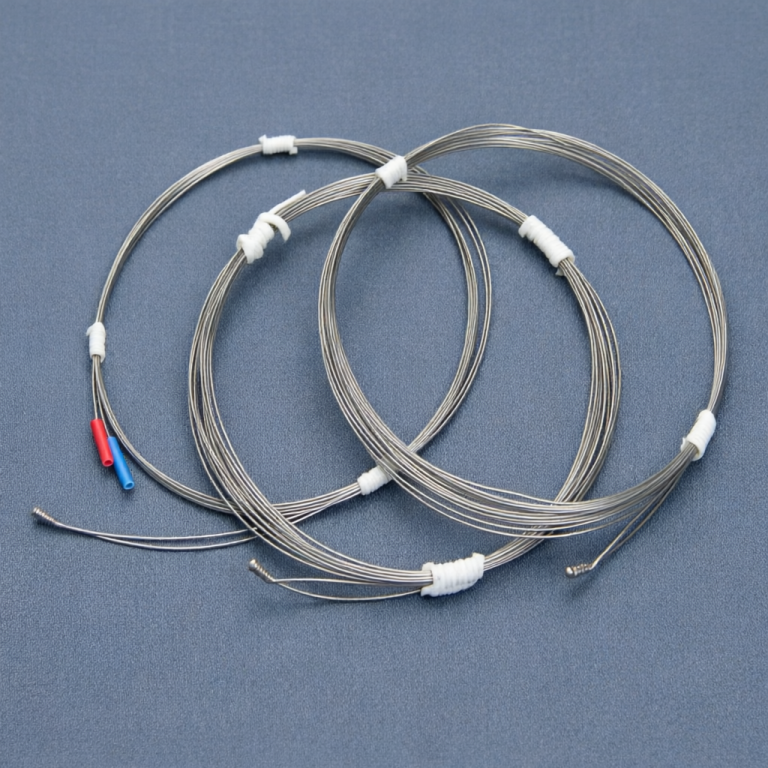
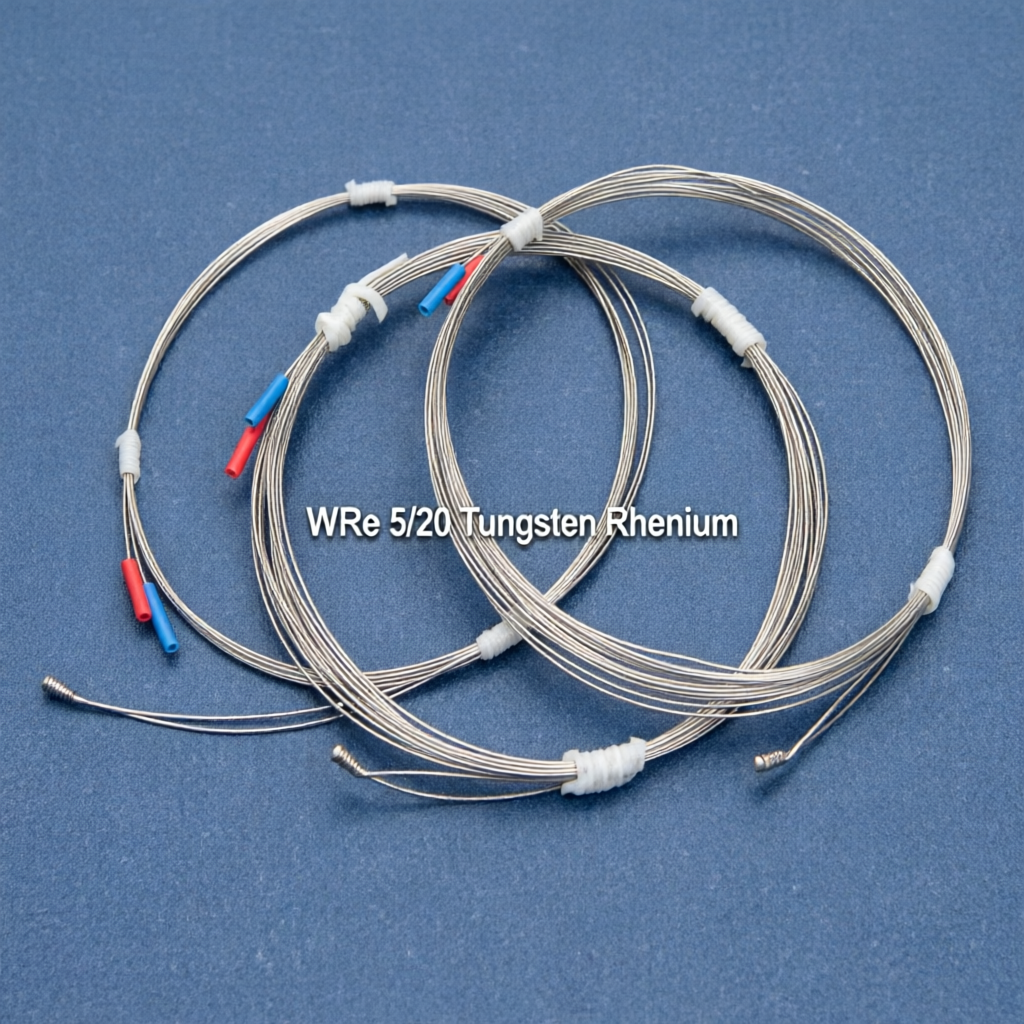
Tungsten rhenium thermocouple wire consists of tungsten-rhenium alloys paired to create a thermoelectric circuit capable of measuring temperatures from approximately 1500°C to 3000°C. The most common pairing combines a low-rhenium alloy leg with a high-rhenium alloy leg. The WRe 5/20 configuration pairs a 5% rhenium alloy (W-5Re) with a 20% rhenium alloy (W-20Re), creating a thermocouple junction that generates measurable voltage differences across extreme temperature gradients.
Other standard pairings include WRe 3/25 and WRe 5/26, each offering slightly different temperature response characteristics and stability profiles. The addition of rhenium to tungsten improves ductility and workability compared to pure tungsten, while maintaining the high melting point necessary for ultra-high temperature service.
Pure tungsten has an extremely high melting point but is brittle and difficult to draw into fine wire. Rhenium addition transforms the material’s mechanical properties without significantly compromising its temperature capability. Low-rhenium alloys (typically 3-5% Re) provide one thermoelectric leg, while high-rhenium alloys (20-26% Re) provide the complementary leg with different thermoelectric characteristics.
This pairing creates sufficient thermoelectric voltage for accurate measurement while both legs maintain structural integrity at temperatures where most metals would melt or oxidize. The specific rhenium percentages in each leg determine the thermocouple’s sensitivity, linearity, and maximum operating temperature.
Primary Applications
Tungsten rhenium thermocouples serve applications where temperature measurement exceeds the capability of platinum-rhodium or base metal thermocouples:
Aerospace and propulsion testing: Engine component testing, combustion research, and thermal protection system evaluation often require temperature measurement above 2000°C in controlled atmospheres or vacuum conditions.
Advanced materials processing: Sintering operations for ceramics, refractory metals, and composite materials frequently operate at temperatures where tungsten rhenium thermocouples provide the only practical measurement option.
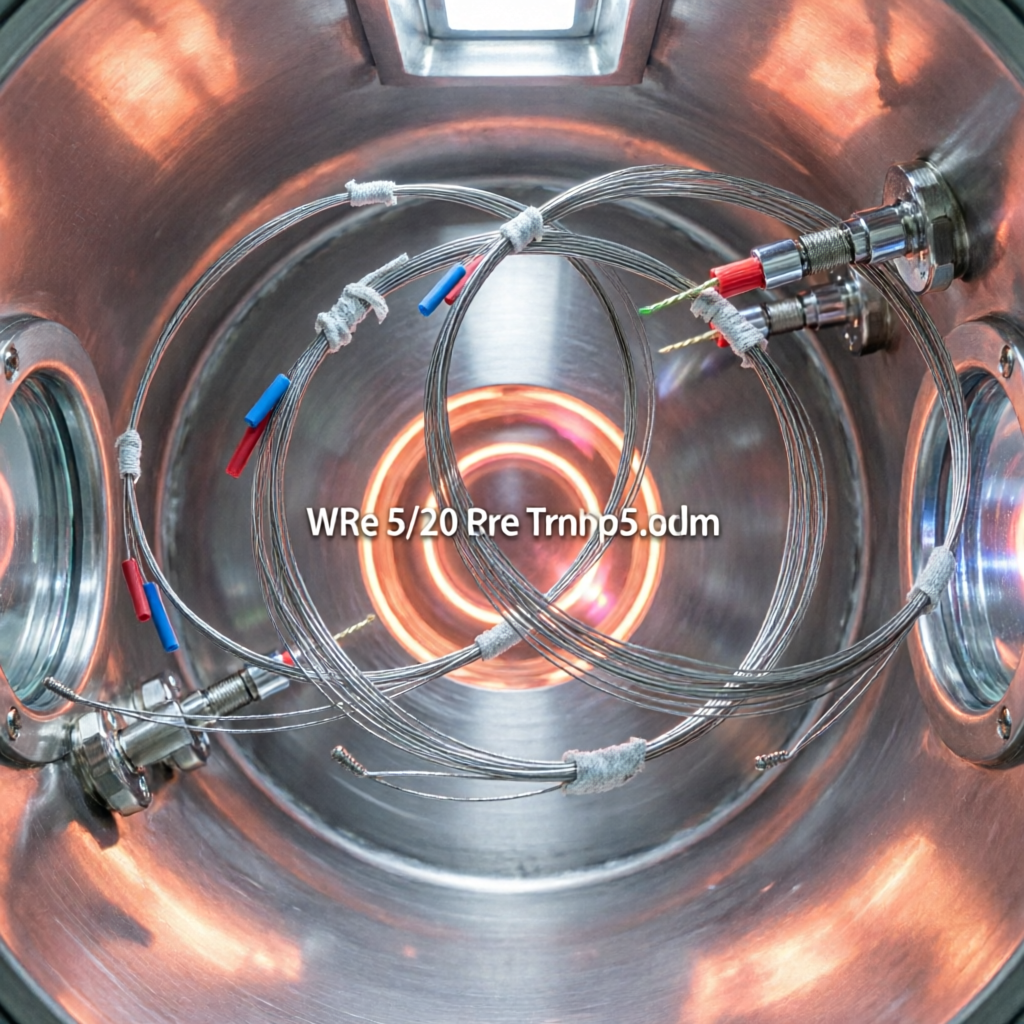
Vacuum furnace operations: High-temperature heat treatment, crystal growth, and materials synthesis in vacuum or inert atmospheres benefit from tungsten rhenium’s stability in non-oxidizing environments.
Research and development: Materials science laboratories use tungsten rhenium thermocouples for high-temperature property characterization, phase transition studies, and process development work.
Atmospheric Limitations and Protection Requirements
Tungsten rhenium thermocouples perform best in vacuum, inert gas, or reducing atmospheres. Oxidation becomes a significant concern above approximately 1000°C in air or oxidizing environments. The tungsten component oxidizes readily, leading to rapid degradation and measurement drift.
Engineers typically protect tungsten rhenium thermocouples with ceramic sheaths or operate them in controlled atmospheres. Common protective materials include alumina, magnesia, or specialized refractory ceramics, though sheath selection depends on the specific temperature range and chemical environment. In some high-vacuum applications, bare wire configurations may be acceptable, but contamination and embrittlement risks increase with exposure time.
Wire Diameter and Mechanical Considerations
Tungsten rhenium thermocouple wire is commonly available in diameters ranging from 0.25mm to 1.0mm. Finer wire diameters (0.25mm to 0.5mm) offer faster thermal response and smaller measurement volumes, making them suitable for localized temperature sensing or applications with tight spatial constraints. Larger diameters (0.5mm to 1.0mm) provide greater mechanical strength and longer service life in demanding environments.
Wire diameter selection involves trade-offs between response time, durability, and ease of handling. Finer wires are more fragile during installation and more susceptible to contamination or mechanical damage. Thicker wires withstand handling better but may introduce larger thermal mass effects in small-scale measurements.
Cost Considerations Compared to Platinum-Rhodium
One practical advantage of tungsten rhenium thermocouples is their cost structure relative to platinum-rhodium alternatives. While platinum-rhodium thermocouples (Types R, S, and B) are standard for many high-temperature applications up to approximately 1700°C, their precious metal content makes them expensive, particularly for larger installations or applications requiring multiple measurement points.
Tungsten rhenium thermocouples extend the temperature range beyond platinum-rhodium capability while using less expensive base materials. However, the specialized processing required for tungsten rhenium alloys and the limited number of manufacturers mean these thermocouples are not commodity items. Buyers should expect lead times and pricing that reflect specialized manufacturing rather than off-the-shelf availability.
Calibration and Measurement Accuracy
Tungsten rhenium thermocouples require careful calibration, particularly for precision measurement applications. Standard reference tables exist for common pairings like WRe 5/26 (Type C) and WRe 3/25 (Type D), but individual thermocouple calibration often improves accuracy in critical applications.
Measurement drift can occur over time due to grain growth, contamination, or preferential evaporation of rhenium at extreme temperatures. Engineers working with tungsten rhenium thermocouples typically implement periodic recalibration schedules or use redundant sensors for critical measurements. Drift rates depend heavily on operating temperature, atmosphere, and thermal cycling frequency.
Common Selection Factors
When specifying tungsten rhenium thermocouple wire, engineers typically consider:
Temperature range: Maximum operating temperature determines whether WRe 5/20, WRe 3/25, or WRe 5/26 pairings are most appropriate. Higher rhenium content in the positive leg generally extends upper temperature capability.
Atmosphere compatibility: Vacuum, inert gas, or reducing atmospheres are essential for long-term stability. Oxidizing environments require protective measures or alternative sensor technologies.
Response time requirements: Wire diameter and junction configuration affect thermal response. Exposed junction designs offer faster response than grounded or insulated junctions.
Mechanical durability: Installation environment, vibration exposure, and handling requirements influence wire diameter selection and sheath design.
Measurement accuracy needs: Critical applications may require individual calibration, while less demanding uses can rely on standard reference tables.
Installation and Handling Practices
Tungsten rhenium wire is more brittle than base metal thermocouple wire, requiring careful handling during installation. Sharp bends or mechanical stress can cause wire fracture, particularly with finer diameters. Junction formation typically uses capacitive discharge welding or other specialized techniques rather than conventional soldering.
Contamination control is important during installation. Surface contaminants can affect thermoelectric properties or accelerate degradation at high temperatures. Clean handling practices and proper storage in controlled environments help maintain wire quality before use.
Current Research and Development Directions
Ongoing work in high-temperature sensing continues to explore tungsten rhenium alloy optimization, protective coating development, and alternative junction designs. Research efforts focus on extending service life in challenging atmospheres, improving measurement stability over thermal cycles, and reducing drift rates at extreme temperatures. Some development work examines thin-film thermocouple configurations using tungsten rhenium alloys for surface temperature measurement in aerospace and energy applications.
Practical Sourcing Considerations
Tungsten rhenium thermocouple wire is available from specialized manufacturers serving high-temperature measurement markets. Standard offerings typically include matched pairs of low-rhenium and high-rhenium wire in common diameters, often sold in lengths of 10m, 25m, or 100m. Custom diameters and alloy compositions may be available with longer lead times.
Buyers should verify wire purity specifications, typically 99.95% or higher, and confirm that both legs of the thermocouple pair come from the same production lot to ensure consistent thermoelectric properties. Documentation of alloy composition and calibration data supports quality control and traceability requirements in regulated industries.
Conclusion
Tungsten rhenium thermocouple wire provides essential temperature measurement capability in extreme environments where conventional sensors cannot operate. The WRe 5/20 configuration offers a practical balance of temperature range, cost, and availability for applications between 1500°C and 2800°C in controlled atmospheres. Understanding the material’s atmospheric limitations, mechanical properties, and calibration requirements helps engineers select and implement these specialized sensors effectively in demanding high-temperature applications.
WRe 5/20 Tungsten Rhenium Thermocouple Wire
atozmat supplies WRe 5/20 tungsten rhenium thermocouple wire in standard diameters from 0.25mm to 1.0mm, with purity over 99.95%. Available in 10m, 25m, and 100m lengths.