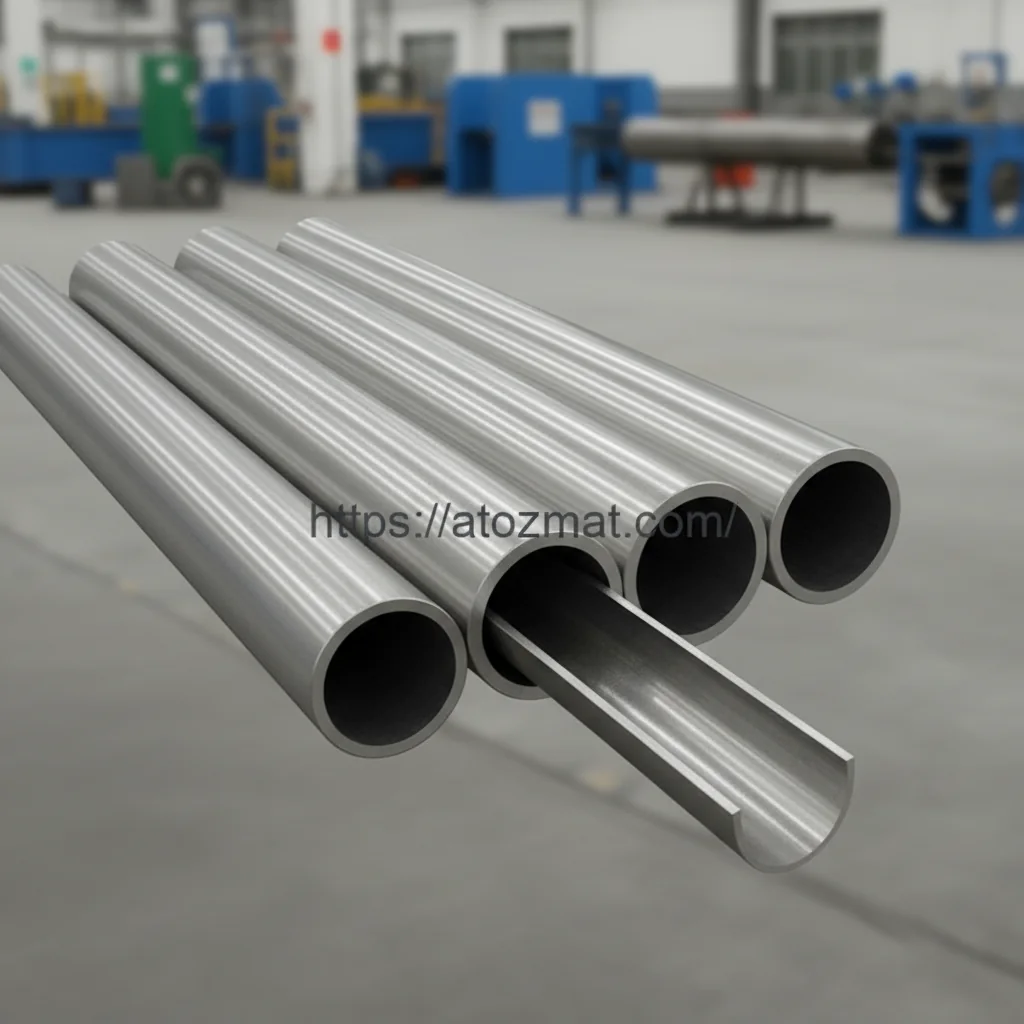
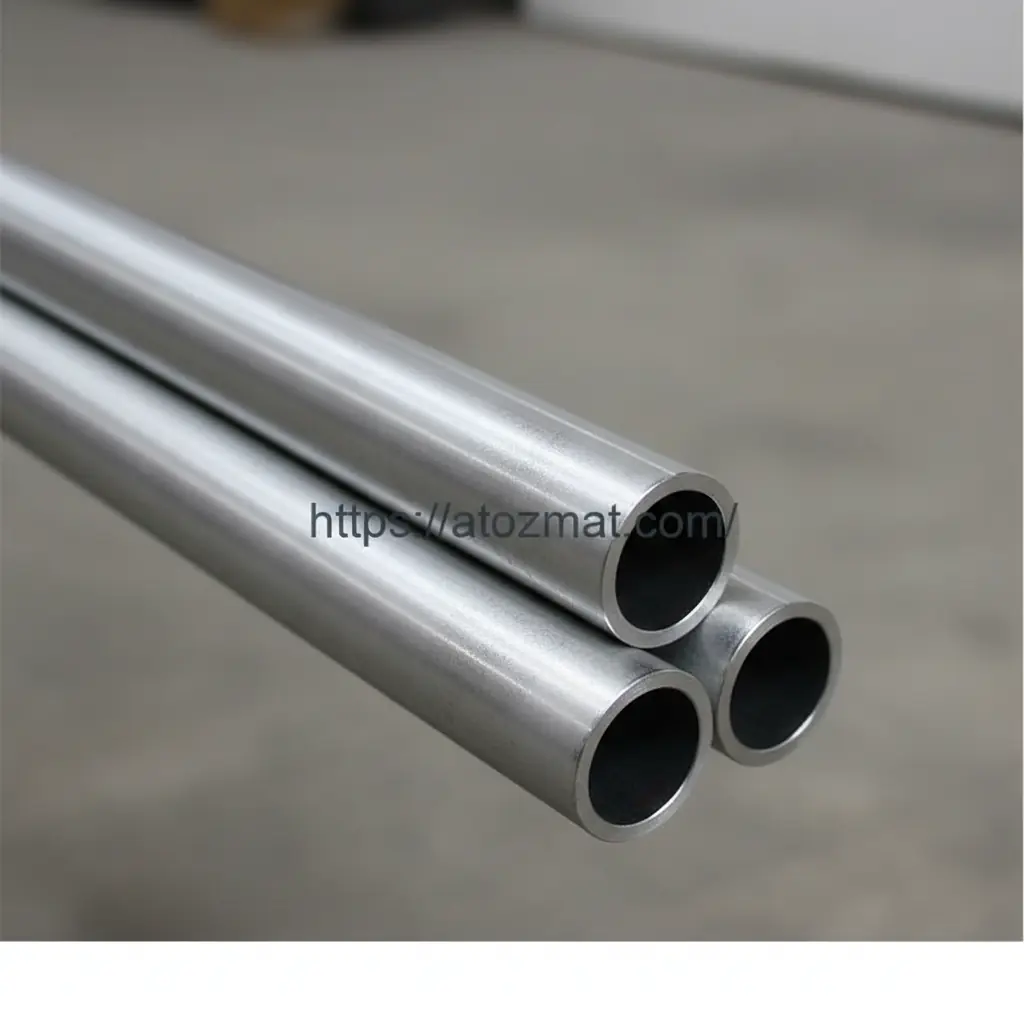
Zirconium alloy 702 tube, commonly referred to as Zr702 tube, occupies a specialized but strategically important position in corrosion engineering. It is used where stainless steels, nickel alloys, titanium, and fluoropolymer-lined components face durability, contamination, or temperature limits. For process engineers and technical buyers, the relevance of Zr702 is not simply that it is “corrosion resistant,” but that it offers a distinctive combination of acid tolerance, low contamination potential, weldability, and useful mechanical integrity in heat exchangers, condensers, reactor internals, and high-purity fluid systems.
Zr702 is commercially pure zirconium with controlled impurity limits and a small hafnium content typically carried with zirconium feedstock. In practice, its value comes from the rapid formation of a stable zirconium oxide surface film. That passive film is unusually robust in many organic and mineral acid environments, particularly where reducing media, chlorides, and mixed contaminants can challenge other alloy systems. This is why zirconium tubing is regularly considered for severe service in acetic acid, formic acid, hydrochloric acid under some operating windows, sulfuric acid in selected concentration ranges, and urea and specialty chemical production systems.
Introduction
Among corrosion-resistant metallic tubes, Zr702 often appears when failure analysis has already eliminated more common materials. In shell-and-tube exchangers, evaporators, absorbers, and transfer lines, its lifecycle economics can become favorable despite high initial material cost because corrosion rates are frequently extremely low under proper service conditions. Published industrial data and long-term field experience often report corrosion rates below 0.1 mm/year in environments where stainless steels are unacceptable and where titanium may show reducing-acid limitations. In carefully controlled media, zirconium can approach near-immunity, with measured attack rates in the range of only a few micrometers per year.
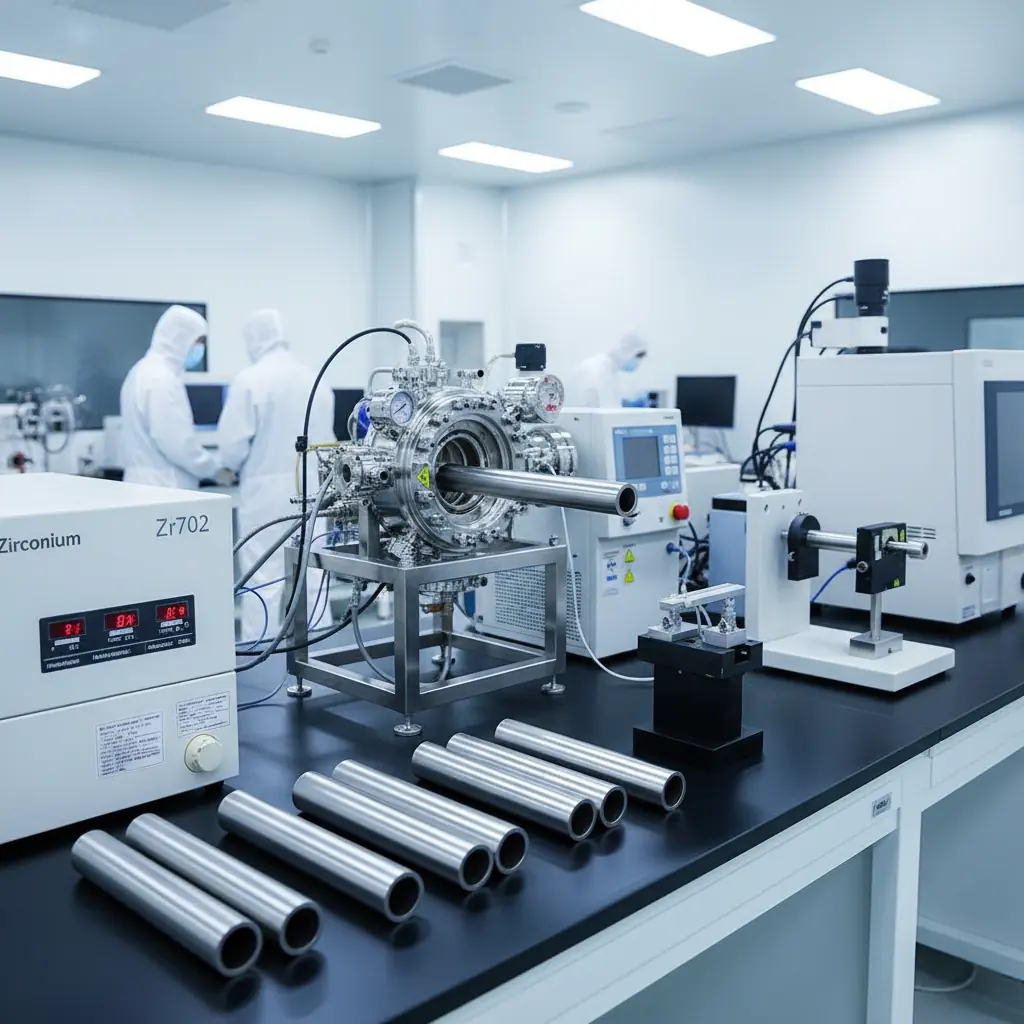
For tubing applications, this matters in three practical ways:
- Wall-thickness retention: lower corrosion allowance can support compact heat exchanger design.
- Purity control: low metal-ion release is attractive in high-purity chemical streams.
- Maintenance reduction: resistance to localized attack can reduce unscheduled shutdowns.
Suppliers such as AtoZMat list Zr702 tube for engineers working in these demanding service windows, but successful use depends more on process-specific materials engineering than on nominal alloy selection alone.
Technical Background
Composition and Metallurgical Character
Zr702 is generally classified as an unalloyed or commercially pure zirconium grade. Compared with zirconium alloys developed for nuclear fuel cladding, 702 is aimed more directly at corrosion service and fabrication reliability. Its microstructure is primarily alpha-zirconium at room temperature, and its properties are influenced strongly by interstitial content, especially oxygen, nitrogen, hydrogen, and carbon. These interstitials raise strength but can reduce ductility and toughness if not carefully controlled.
Typical engineering expectations for annealed Zr702 include:
- Density around 6.5 g/cm³
- Melting point near 1850°C
- Elastic modulus about 88–99 GPa
- Tensile strength often in the range of 380–550 MPa, depending on product form and condition
- Good room-temperature ductility for tube forming and fabrication
The relatively modest elastic modulus compared with steels affects tube support design, vibration behavior, and thermal stress development. Its coefficient of thermal expansion is lower than that of austenitic stainless steels, which can be useful in managing thermal mismatch in multi-material assemblies.
Corrosion Mechanism
The defining feature of zirconium in process environments is its tenacious oxide film, typically zirconia-based. This passive layer develops rapidly and can self-repair under oxidizing conditions. The result is excellent resistance in many acids and brines that would aggressively attack steels. However, zirconium’s corrosion resistance is not universal; it is highly dependent on oxidizing potential, impurity chemistry, temperature, water content, and the presence of aggressive species such as fluorides.
Key performance tendencies include:
- Strong resistance in many organic acids, including acetic acid systems common in acetic acid production equipment.
- Good performance in hydrochloric acid over a wider concentration range than many competing metals, provided oxidizing contaminants are not excessive and temperature remains within qualified limits.
- Sensitivity to hydrofluoric acid and fluoride ions, which can destabilize the passive film rapidly.
- Potential vulnerability in strongly oxidizing ferric or cupric chloride conditions, where pitting, crevice attack, or accelerated corrosion may occur.
- Excellent behavior in many alkaline and high-purity water environments, though process-specific verification remains necessary.
In design practice, trace impurities can matter as much as the nominal acid concentration. For example, a process stream that is nominally compatible with zirconium may become unsafe if fluoride contamination reaches even relatively low levels. Similarly, wet chlorine or oxidizing chloride contaminants may shift the corrosion mechanism from stable passivity to rapid localized attack.
Thermal and Surface Considerations
Zr702 is also attractive for heat-transfer service because it combines corrosion resistance with thermal conductivity superior to many high-nickel corrosion alloys, though lower than copper or aluminum. Values are commonly around 20–23 W/m·K at room temperature, which is adequate for exchanger tubing where corrosion margin often dominates material selection.
Surface finish has a disproportionate effect on service reliability. Clean, low-contamination tube surfaces support stable passivation, while iron pickup, embedded tooling residue, chlorides, or fluorides from fabrication can create initiation sites for attack. For this reason, zirconium tubing requires strict attention to shop cleanliness, pickling chemistry, handling practice, and post-fabrication surface conditioning.
Applications, Performance, and Process Considerations
Chemical Processing Equipment
Zr702 tube is widely associated with heat exchangers and condensers in corrosive chemical plants. Acetic acid production is one of the most established examples, where zirconium has long been favored for handling hot acid streams and associated corrosive mixtures. In such services, field data have often shown zirconium to significantly outperform titanium and stainless steels, especially when reducing conditions challenge the passive stability of those materials.
Typical application areas include:
- Shell-and-tube heat exchanger tubing
- Condenser and reboiler tube bundles
- Evaporator tubes
- Reactor feed and transfer tubing
- High-purity acid handling systems
Where corrosion rates are exceptionally low, process designers may pursue longer service intervals and reduced contamination risk. This can be important in pharmaceutical intermediates, electronic chemicals, and specialty organics, where dissolved metal contamination affects downstream performance or purification cost.
Nuclear and High-Purity Service Context
Although zirconium is strongly associated with the nuclear sector, Zr702 tube used in industrial supply is not the same design space as thin-wall fuel cladding alloys such as Zircaloy or advanced Nb-containing nuclear grades. Still, zirconium’s low neutron absorption cross-section historically drove extensive metallurgical research, and some of that knowledge base informs industrial tube processing, oxidation behavior, hydrogen pickup studies, and high-purity manufacturing practice.
In non-nuclear high-purity systems, zirconium tube can be selected when low ion release, chemical cleanliness, and resistance to aggressive media matter more than raw structural strength. In these contexts, the absence of significant alloying additions may be beneficial from a contamination-control perspective.
Fabrication and Welding
Zr702 is generally considered fabricable, but only with disciplined contamination control. During tube manufacturing and joining, the main technical concern is interstitial absorption at elevated temperature. Oxygen, nitrogen, and especially hydrogen can embrittle zirconium if shielding, cleaning, and thermal exposure are poorly controlled.
Important fabrication points include:
- Cold working and annealing: tube strength can be increased by cold work, but excessive strain may require annealing to restore ductility and dimensional stability.
- Welding atmosphere control: gas tungsten arc welding and related methods are feasible, but weld zones and heat-affected zones must be protected from air ingress. Back purging and extended trailing shields are commonly used.
- Tooling cleanliness: contact with carbon steel tooling can transfer iron and promote contamination.
- Pickling and surface treatment: chemical cleaning protocols must avoid introducing harmful residues, especially fluorides.
Well-executed zirconium welds can retain good corrosion performance, but poorly protected welds may show discoloration, oxygen enrichment, reduced ductility, and compromised service life. In practice, weld color inspection is often used as a rapid quality indicator, though final acceptance for critical service should rely on qualified procedures and, where appropriate, mechanical and corrosion testing.
Tube Form, Tolerances, and Quality Variables
For technical procurement, the tube specification matters beyond alloy grade alone. Seamless versus welded construction, annealed versus cold-worked condition, dimensional tolerances, straightness, inner-surface quality, and residual stress state all influence performance in pressure service and heat-transfer assemblies.
Key quality variables include:
- Interstitial impurity control, especially O, N, H, and C
- Inclusion content and feedstock cleanliness
- Grain size and texture, which affect formability and anisotropy
- Residual contamination from processing lubricants or shop handling
- Hydrogen content, since excessive pickup can promote hydride-related embrittlement
Hydrogen is particularly important in zirconium metallurgy. Under certain corrosion or processing conditions, absorbed hydrogen can precipitate as brittle hydrides. While this issue is most intensively studied in nuclear zirconium alloys, the same underlying metallurgical principle applies to industrial grades: hydrogen control during pickling, welding, and service exposure is essential.
Challenges and Trade-Offs
Not a Universal Corrosion Solution
The strongest misconception about zirconium is that it is chemically inert in all severe environments. In reality, it offers outstanding resistance in many acids but can fail rapidly in fluoride-bearing solutions, certain oxidizing chloride systems, or contaminated streams that alter electrochemical stability. Engineering review should consider not just normal chemistry but upset conditions, cleaning agents, startup/shutdown transients, and cross-contamination from adjacent process steps.
Cost Versus Lifecycle Value
Zr702 tube is expensive relative to stainless steels and many nickel alloys. Its use is justified when corrosion-driven downtime, contamination risk, or replacement frequency dominate total cost of ownership. In critical service, the economics often favor zirconium when expected lifetime increases from months or a few years to a decade or more. But where the process envelope is not clearly favorable, a detailed corrosion and lifecycle assessment is necessary.
Mechanical Strength Limits
Compared with high-strength steels or precipitation-hardened nickel alloys, commercially pure zirconium is not a high-strength structural material. Pressure containment, vibration resistance, and mechanical handling of thin-wall tubes require conservative design. Tube support spacing, flow-induced vibration analysis, and thermal cycling should be evaluated carefully, especially in exchanger bundles.
Inspection and Maintenance
Nondestructive evaluation of zirconium tubing follows many standard methods, but inspection planning should account for oxide-film behavior, service deposits, and the possibility of localized attack in crevices or under fouling. Maintenance teams also need awareness that conventional acid cleaning chemistries safe for stainless equipment may not be acceptable for zirconium if fluoride-containing formulations are involved.
Research Directions and Future Opportunities
Current research involving zirconium tubing and zirconium-based process materials is moving in several practical directions.
Surface Engineering and Corrosion Mapping
Researchers continue to refine electrochemical maps for zirconium in multicomponent acid systems, especially where small additions of chlorides, ferric ions, copper salts, or fluorides change behavior abruptly. These datasets are valuable because industrial failures often result from impurity interactions rather than bulk chemistry alone.
Surface-engineering studies are also exploring whether modified oxide layers, pre-oxidation treatments, or hybrid ceramic coatings can extend performance into borderline environments. The challenge is maintaining coating integrity under thermal cycling and preserving the low-contamination advantage of the base metal.
Additive and Advanced Joining Methods
Although wrought tube remains the dominant industrial product form, there is increasing interest in advanced joining, repair, and near-net-shape zirconium processing. Research on laser welding, electron beam methods, and additive manufacturing of zirconium is still developing, largely because the metal’s high reactivity at temperature demands exceptional atmospheric control. If process reliability improves, custom zirconium flow components and integrated tube-to-header geometries may become more practical.
Hydrogen Management and Microstructural Control
Hydrogen pickup, hydride morphology, and texture effects remain active topics. Better understanding of how fabrication history influences hydride precipitation could improve reliability in long-duration thermal and chemical service. This is relevant not only to extreme environments but also to quality assurance for precision tubing where long service life is expected.
High-Purity and Semiconductor-Chemical Uses
As specialty chemical manufacturing pushes toward tighter contamination control, zirconium is gaining renewed attention in selected high-purity fluid systems. This is not a mass-market substitution for common tube alloys, but in niche applications where trace metal release and corrosive chemistry intersect, commercially pure zirconium may be increasingly attractive.
Conclusion
Zr702 zirconium tube is a high-performance engineering material best understood through its corrosion mechanism, fabrication sensitivity, and process-specific operating window. Its major strengths are exceptional resistance in many corrosive acid systems, low contamination potential, useful thermal conductivity for exchanger service, and workable fabrication when interstitial contamination is tightly controlled. Its major limitations are susceptibility to fluoride-bearing media, sensitivity to oxidizing impurities in some chloride systems, moderate mechanical strength relative to structural alloys, and high initial cost.
For chemical processing, high-purity systems, and specialized thermal equipment, Zr702 often becomes the technically correct choice when more common corrosion-resistant alloys fail or introduce unacceptable contamination risk. The best outcomes come from disciplined specification of purity, tube condition, weld quality, surface cleanliness, and actual process chemistry rather than from alloy name recognition alone.
Product Link
Product reference: Zirconium Tube (Zr702 Tube) | Z006 at AtoZMat.