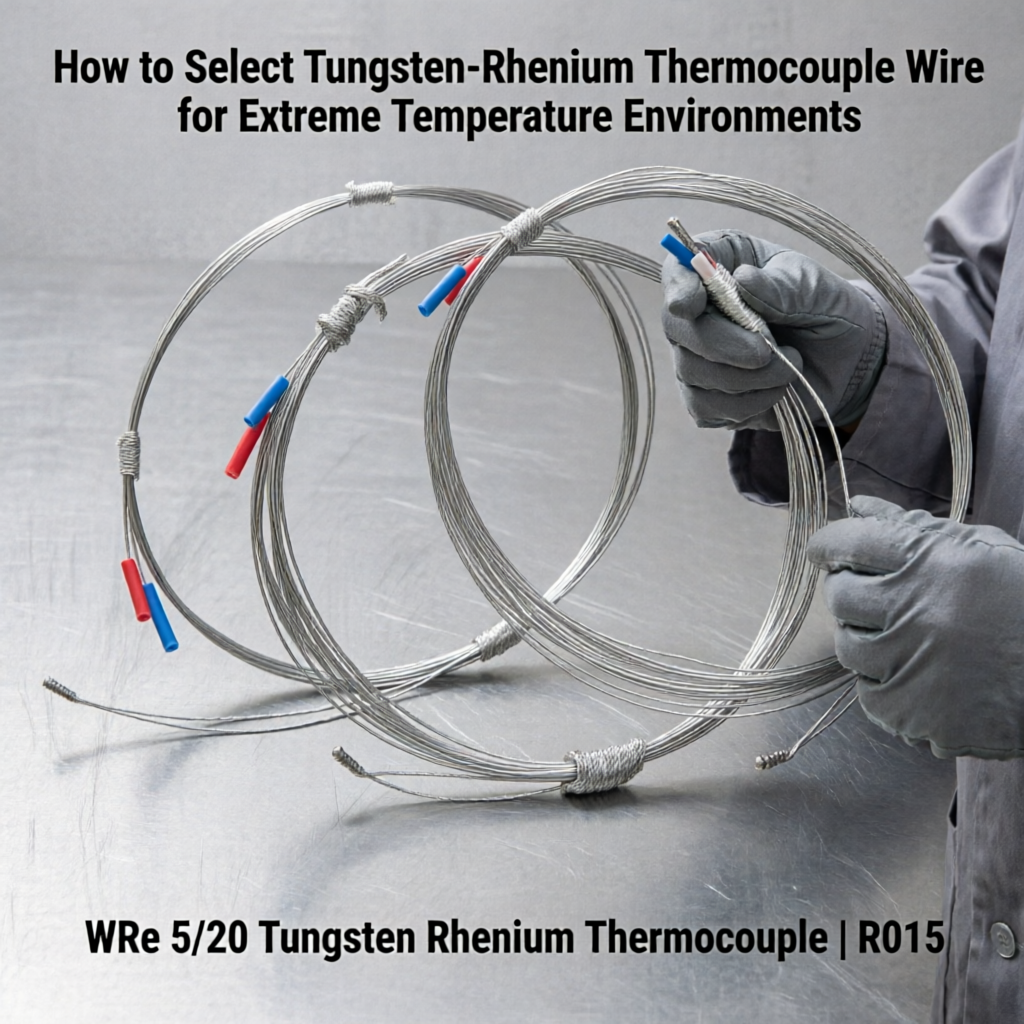
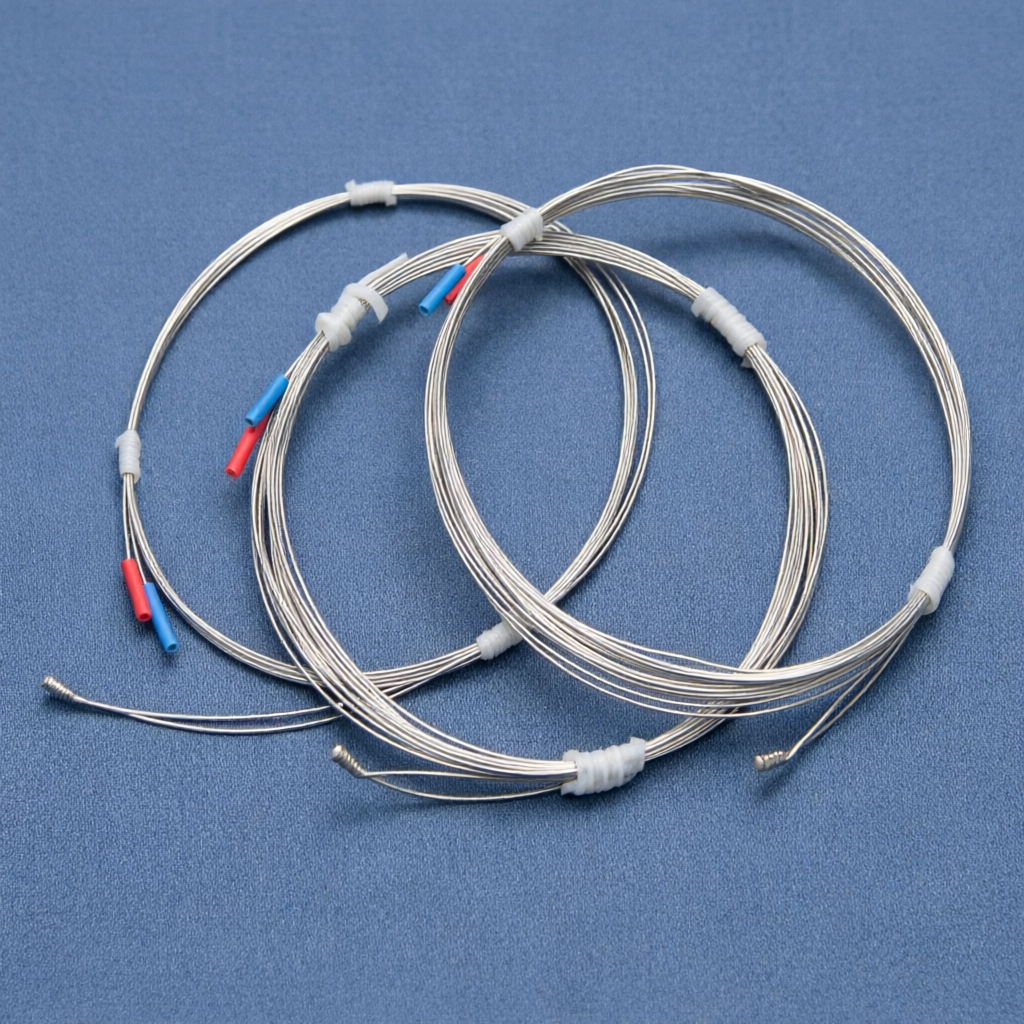
Tungsten-rhenium thermocouple wire represents one of the few practical solutions for temperature measurement in extreme environments above 2000°C. The WRe 5/20 configuration—combining a 5% rhenium leg with a 20% rhenium leg—offers a balance of high-temperature capability, reasonable EMF output, and oxidation resistance that makes it valuable in aerospace testing, materials research, and advanced manufacturing processes.
For engineers and technical buyers working with high-temperature furnaces, vacuum systems, or materials characterization equipment, understanding the selection criteria for tungsten-rhenium wire can directly impact measurement accuracy and sensor longevity.
WRe 5/20 thermocouple wire consists of two dissimilar tungsten-rhenium alloys that generate a measurable voltage when exposed to a temperature gradient. The positive leg contains tungsten with 5% rhenium (W-5Re), while the negative leg contains tungsten with 20% rhenium (W-20Re). This composition is standardized and sometimes referred to as Type C thermocouple wire in industrial documentation.
The addition of rhenium to tungsten serves multiple purposes. Rhenium increases ductility compared to pure tungsten, making the wire easier to draw and handle during sensor fabrication. It also improves oxidation resistance at elevated temperatures and modifies the thermoelectric properties to produce a usable EMF signal across a wide temperature range.
Typical wire diameters range from 0.010 inches (0.25 mm) to 0.040 inches (1.0 mm), with finer gauges used in fast-response applications and heavier gauges selected for durability in harsh environments. Wire purity typically exceeds 99.9% for the combined tungsten-rhenium system, though trace impurities can affect long-term stability at extreme temperatures.
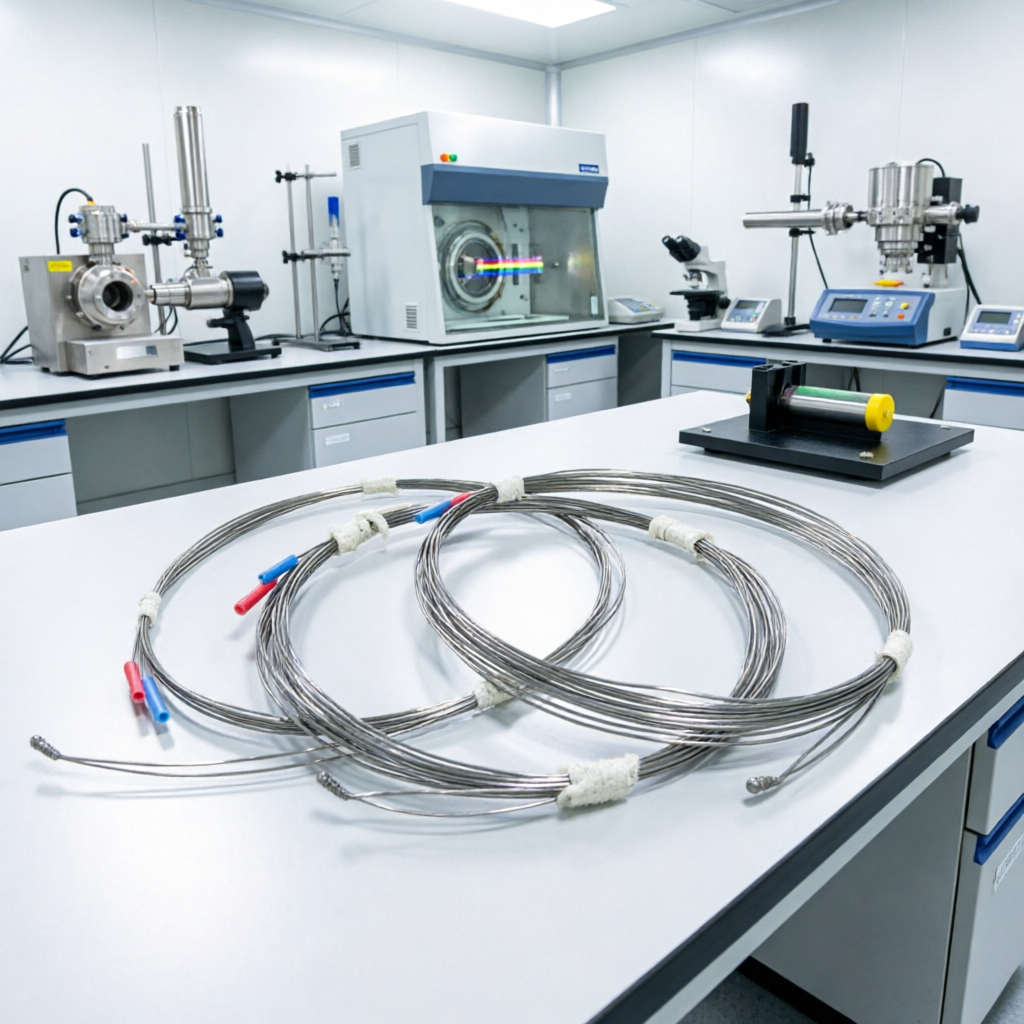
Research laboratory application context for WRe 5/20 Tungsten Rhenium Thermocouple Wire | R015
Temperature Range and Performance Characteristics
WRe 5/20 thermocouples operate effectively from approximately 0°C to 2320°C (32°F to 4208°F) in inert or vacuum atmospheres. The upper limit is constrained by grain growth, recrystallization, and eventual embrittlement of the wire rather than by melting point alone.
Research on tungsten-rhenium thermocouple stability indicates that EMF drift becomes more pronounced above 2000°C, particularly in long-duration exposures. Studies examining thermal cycling behavior show that repeated heating and cooling can accelerate grain boundary migration and compositional changes at the junction, leading to calibration shifts of 5-15°C over hundreds of hours at peak temperature.
The Seebeck coefficient for WRe 5/20 couples ranges from approximately 10 to 15 μV/°C across the usable temperature span, providing adequate sensitivity for most industrial measurement applications. This output is lower than base metal thermocouples like Type K or Type J, but the extreme temperature capability compensates for the reduced signal strength.
Oxidation Behavior and Atmosphere Requirements
One of the most critical selection factors for tungsten-rhenium wire is atmospheric compatibility. These thermocouples oxidize rapidly in air above approximately 500°C, forming volatile tungsten oxides that degrade the wire and compromise measurement accuracy.
Practical applications require either vacuum environments (typically below 10⁻⁴ torr), inert gas atmospheres (argon or helium), or reducing atmospheres (hydrogen or forming gas). Even trace oxygen contamination can lead to measurable wire degradation during extended high-temperature exposures.
Recent experimental work on protective coatings for tungsten-rhenium wire has explored ceramic sheaths and oxide barriers, but these approaches introduce thermal lag and potential contamination issues. Most industrial users rely on controlled atmospheres rather than protective coatings for reliable long-term operation.
Common Applications in Research and Industry
Aerospace testing facilities use WRe 5/20 thermocouples to measure temperatures in rocket nozzles, hypersonic wind tunnels, and thermal protection system evaluations. The ability to withstand brief exposures above 2000°C makes these sensors valuable for transient heating studies.
Materials research laboratories employ tungsten-rhenium thermocouples in high-temperature furnaces for crystal growth, sintering studies, and phase transformation research. Accurate temperature measurement is essential for reproducing experimental conditions and correlating thermal history with material properties.
Vacuum furnace manufacturers integrate WRe 5/20 sensors into heat treating systems for refractory metals, ceramics, and advanced alloys. The vacuum compatibility and high-temperature range align well with processing requirements for tungsten, molybdenum, tantalum, and ceramic matrix composites.
Semiconductor equipment builders occasionally use tungsten-rhenium thermocouples in CVD reactors and epitaxial growth systems where substrate temperatures exceed the range of conventional platinum-based sensors. However, contamination concerns and cost considerations limit widespread adoption in semiconductor manufacturing.
Selection Criteria for Engineers and Buyers
Wire diameter selection involves balancing response time, mechanical durability, and thermal mass. Finer wires (0.010-0.015 inches) respond faster to temperature changes but are more fragile and prone to breakage during installation. Heavier gauges (0.025-0.040 inches) offer better mechanical stability but introduce thermal lag in dynamic measurements.
Junction configuration affects both performance and reliability. Butt-welded junctions provide the smallest thermal mass and fastest response, while twisted and welded junctions offer improved mechanical strength. Some applications use grounded junctions for faster response, while others require ungrounded configurations to minimize electrical noise.
Insulation and sheathing materials must withstand the operating environment without introducing contamination. Ceramic insulators like alumina or magnesia are common, but material selection depends on atmosphere compatibility and thermal expansion matching. Tantalum or molybdenum sheaths provide mechanical protection in some vacuum applications.
Calibration stability becomes increasingly important for long-duration measurements. Consider whether the application requires periodic recalibration or if initial accuracy is sufficient. Some research applications demand traceable calibration to NIST standards, while process control applications may accept broader tolerances.
Common Technical Challenges
Embrittlement after high-temperature exposure is one of the most frequently encountered issues with tungsten-rhenium wire. The material becomes progressively more brittle as grain size increases, making the wire susceptible to fracture during handling or thermal cycling. This limits the practical reuse of thermocouples after extended high-temperature service.
Contamination from furnace atmospheres or adjacent materials can alter thermocouple EMF output. Carbon contamination is particularly problematic, as it can form tungsten carbides that change the alloy composition and shift calibration. Researchers working with graphite furnaces or carbon-containing atmospheres must carefully isolate tungsten-rhenium sensors.
Cold junction compensation requires careful attention because the reference junction temperature significantly affects measurement accuracy. Industrial systems typically use electronic cold junction compensation or ice point references, but installation errors or thermal gradients near the reference junction can introduce systematic errors.
Wire homogeneity variations between production batches can affect calibration consistency. While reputable suppliers maintain tight composition control, those working on precision research applications should consider lot testing or matched wire sets for critical measurements.
Current Research Directions
Materials scientists continue to investigate alternative tungsten-rhenium compositions to extend temperature range or improve stability. Experimental work on W-3Re/W-25Re couples has shown potential for reduced drift rates, though these non-standard compositions require custom calibration and are not widely available commercially.
Thin-film thermocouple research has explored depositing tungsten-rhenium junctions directly onto substrates for surface temperature measurement. Sputtered or evaporated W-Re films offer fast response times and minimal thermal mass, but adhesion, stability, and calibration challenges have limited practical implementation.
Computational modeling of thermocouple behavior at extreme temperatures is helping researchers understand drift mechanisms and predict long-term stability. Finite element analysis of thermal gradients and grain boundary evolution provides insights that guide sensor design and installation practices.
Practical Sourcing Considerations
Lead times for tungsten-rhenium wire can extend from several weeks to several months depending on wire diameter, quantity, and supplier inventory. The specialized nature of the material and limited number of producers contribute to longer delivery schedules compared to base metal thermocouples.
Minimum order quantities vary by supplier but often start at 10-25 feet for standard diameters. Custom wire sizes or special purity grades may require larger minimum orders or involve setup charges.
Cost per foot increases significantly for finer wire diameters due to additional drawing operations and higher scrap rates during manufacturing. Balance wire diameter requirements against budget constraints and consider whether slightly heavier gauges can meet application needs.
Documentation and traceability become important for regulated industries or research applications requiring measurement validation. Suppliers should provide material certifications, composition analysis, and calibration data when specified.
Conclusion
WRe 5/20 tungsten-rhenium thermocouple wire fills a critical niche in high-temperature measurement applications where conventional thermocouples cannot operate. Success with these sensors depends on careful attention to atmosphere control, proper installation practices, and realistic expectations about calibration stability at extreme temperatures.
Engineers selecting tungsten-rhenium wire should prioritize atmosphere compatibility, wire diameter appropriate for the application, and supplier quality documentation. While these thermocouples cost more than base metal alternatives, their unique high-temperature capability justifies the investment in demanding research and industrial applications.
Working with experienced suppliers who understand the material’s behavior and application requirements can help avoid common pitfalls and ensure reliable temperature measurement in extreme environments.
Product Information
Industrial buyers and research teams can find WRe 5/20 tungsten-rhenium thermocouple wire through specialized materials suppliers. atozmat offers WRe 5/20 thermocouple wire for high-temperature measurement applications.