Bismuth cobalt oxide (BiCoO3) has attracted significant attention in materials research due to its potential multiferroic properties and magnetoelectric coupling behavior. For researchers working with thin film deposition systems, understanding how process parameters affect film quality, crystallinity, and functional properties is essential for achieving reproducible results in laboratory and pilot-scale environments.
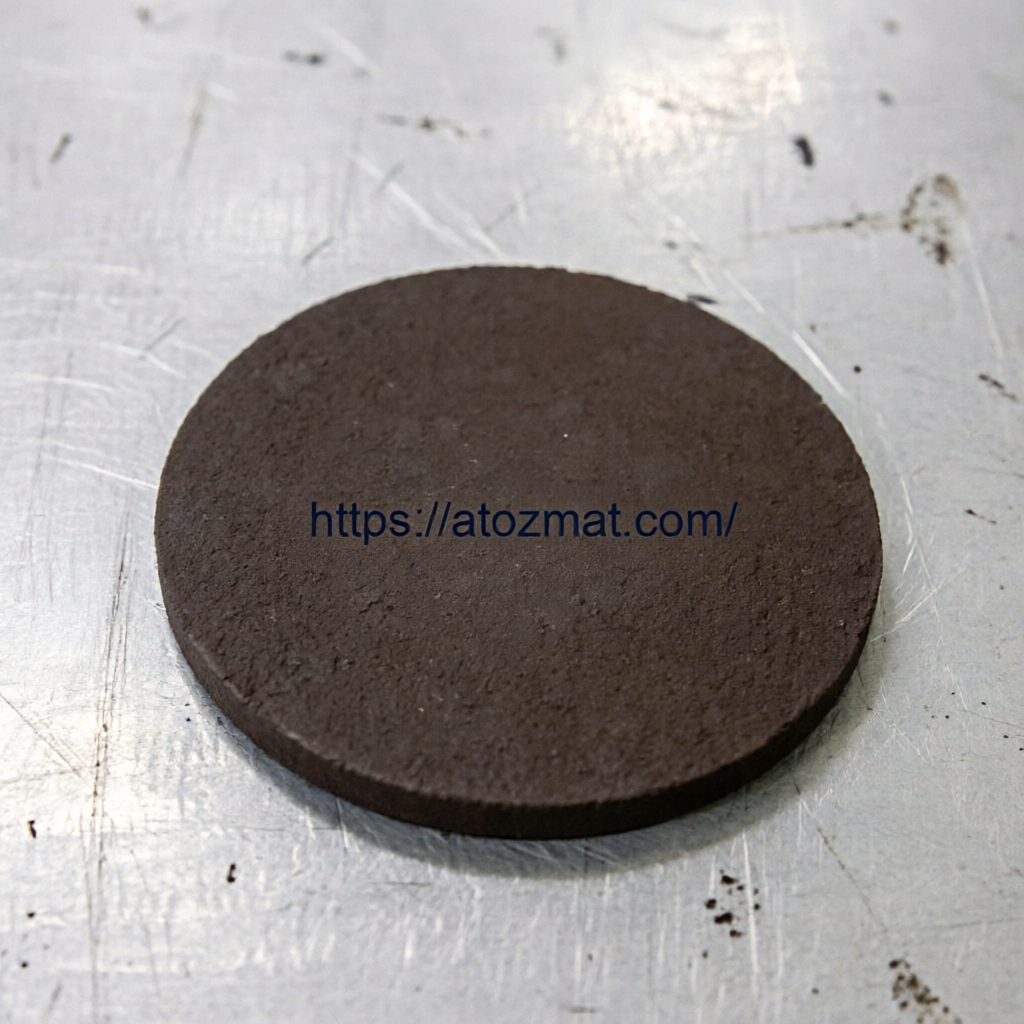
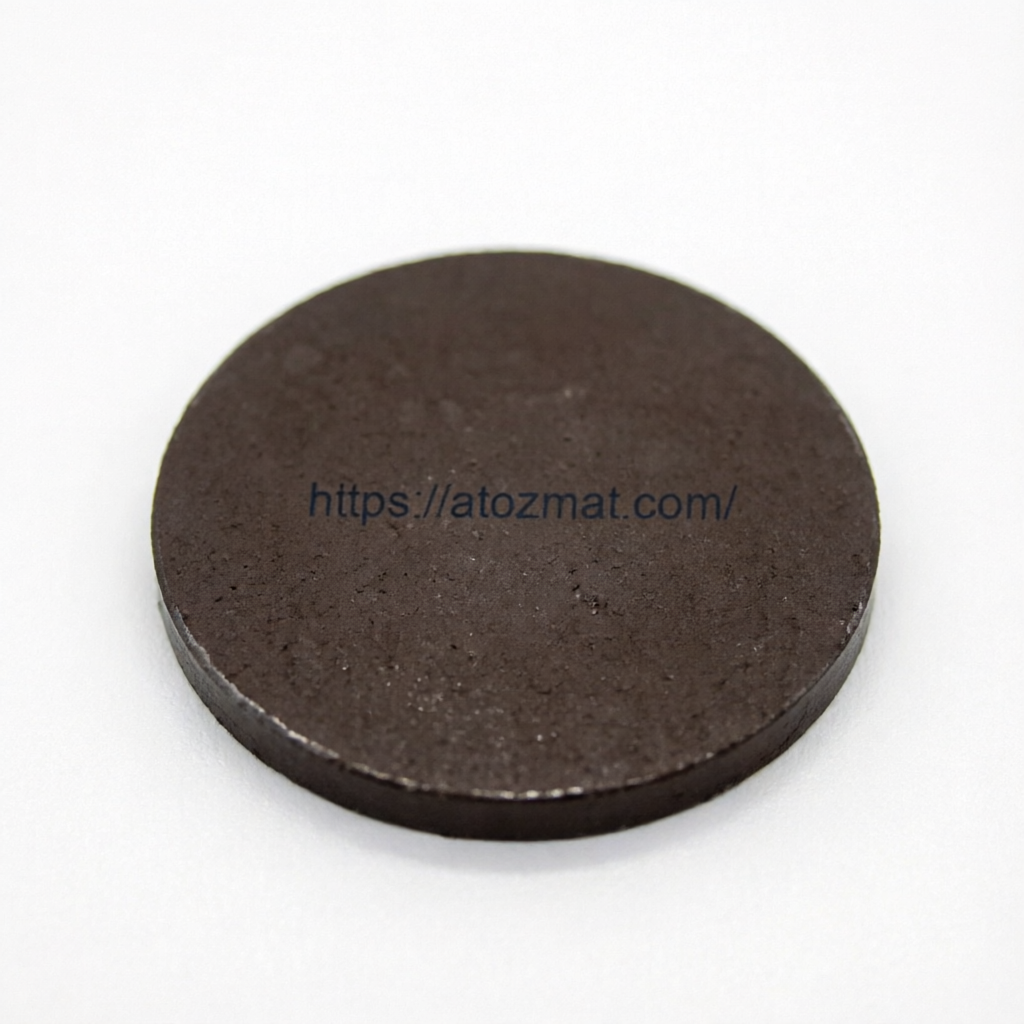
Bismuth cobalt oxide sputtering targets are ceramic source materials used in physical vapor deposition processes to create BiCoO3 thin films on various substrates. These targets typically consist of a sintered bismuth-cobalt-oxygen compound designed to release material atoms when bombarded by energetic ions in a sputtering chamber. The resulting vapor deposits onto substrates as a thin film with controlled thickness and composition.
The material system presents several fabrication challenges. Bismuth’s relatively high vapor pressure compared to cobalt can lead to compositional drift during deposition. Oxygen stoichiometry control is critical for achieving the desired phase and functional properties. Target density and grain structure influence sputtering uniformity and long-term target stability during extended deposition runs.
Research laboratory application context for Bismuth Cobalt Oxide Sputtering Targets (BiCoO3 Sputtering Targets) | BiCoO3-ST
Key Deposition Parameters for BiCoO3 Films
Research groups working with bismuth cobalt oxide typically optimize several interconnected process variables:
Substrate Temperature
Substrate temperature significantly affects film crystallinity and phase formation. Researchers commonly work with substrate temperatures ranging from 400°C to 700°C during deposition. Lower temperatures often produce amorphous or poorly crystallized films, while higher temperatures promote crystalline phase formation but may increase bismuth loss through evaporation. Post-deposition annealing in controlled atmospheres is frequently employed to improve crystallinity and optimize functional properties.
Sputtering Power and Deposition Rate
RF magnetron sputtering is the most common approach for oxide targets. Typical power densities range from 2 to 5 W/cm², resulting in deposition rates between 5 and 20 nm/min depending on target-substrate distance and chamber geometry. Higher power can increase deposition rate but may also introduce more defects or compositional variations. Researchers balance throughput needs against film quality requirements.
Atmosphere and Pressure
Most BiCoO3 deposition occurs in argon-oxygen mixtures. Oxygen partial pressure typically ranges from 5% to 30% of total pressure, with total chamber pressures between 3 and 15 mTorr. Oxygen content affects film stoichiometry and oxidation state of the cobalt ions, which directly influences magnetic and electrical properties. Too little oxygen can produce oxygen-deficient films with altered properties, while excessive oxygen may reduce deposition rate.
Substrate Selection and Film Quality
Substrate choice significantly impacts BiCoO3 film properties due to lattice mismatch, thermal expansion differences, and chemical compatibility considerations:
Silicon substrates with thermal oxide layers are common for initial characterization work and device integration studies. The amorphous SiO2 surface typically produces polycrystalline BiCoO3 films without strong preferred orientation.
Perovskite substrates such as SrTiO3, LaAlO3, or LSAT enable epitaxial or highly textured growth when lattice parameters are reasonably matched. Single-crystal substrates allow researchers to study intrinsic material properties with reduced grain boundary effects, though substrate costs are considerably higher.
Platinum-coated substrates are frequently used when bottom electrode integration is needed for electrical characterization. Platinum provides chemical stability at elevated temperatures and serves as a conductive layer for ferroelectric or magnetoelectric measurements.
Film thickness typically ranges from 50 nm to 500 nm in research applications, with thinner films showing more pronounced substrate influence and thicker films potentially developing increased stress or cracking.
Current Research Directions and Technical Challenges
The magnetoelectric research community continues to address several technical challenges with bismuth cobalt oxide thin films:
Phase Stability and Composition Control
Maintaining stoichiometric BiCoO3 composition throughout deposition remains challenging due to bismuth’s volatility. Researchers have explored target composition adjustments, co-sputtering approaches, and post-deposition treatments to compensate for bismuth loss. Phase purity is critical because secondary phases can mask or alter the intrinsic multiferroic properties of interest.
Interface Engineering
For device applications, interface quality between BiCoO3 and electrode materials significantly affects electrical and magnetic coupling. Research efforts focus on buffer layer strategies, interface oxidation control, and interdiffusion barriers to improve device performance and reliability.
Scaling and Reproducibility
Moving from small-scale laboratory depositions to larger substrate areas or production environments introduces uniformity challenges. Target erosion patterns, substrate heating uniformity, and plasma stability all become more critical at larger scales. Process monitoring and in-situ diagnostics help maintain consistency across deposition runs.
Film Characterization Considerations
Researchers typically employ multiple characterization techniques to assess BiCoO3 film quality:
X-ray diffraction confirms phase formation and crystallinity. Rocking curve measurements quantify crystalline quality for epitaxial films. Scanning electron microscopy reveals surface morphology and grain structure. Energy-dispersive X-ray spectroscopy or X-ray photoelectron spectroscopy verifies composition and oxidation states. Magnetic and electrical property measurements assess functional performance relevant to specific applications.
Contamination from target handling, chamber conditions, or substrate preparation can significantly degrade film properties. Maintaining high vacuum base pressure, proper target pre-sputtering, and clean substrate surfaces are standard practices for achieving reproducible results.
Selection Factors for Research Applications
When sourcing bismuth cobalt oxide sputtering targets for research work, several practical factors warrant consideration:
Target purity affects film contamination levels and property reproducibility. Research-grade targets typically specify 99.9% or higher purity, though exact requirements depend on application sensitivity.
Target dimensions must match the sputtering system’s cathode assembly. Common research-scale sizes include 2-inch and 3-inch diameter targets with thicknesses of 1/8 inch or 1/4 inch, though custom dimensions are often available.
Bonding and backing plates may be required depending on the sputtering system. Some targets ship bonded to copper or molybdenum backing plates for improved thermal management, while others are supplied as unbonded discs.
Lead time and availability vary by supplier and target complexity. Oxide ceramic targets generally require longer fabrication times than metal targets due to sintering and quality control steps.
Lot-to-lot consistency becomes important for multi-year research programs or when comparing results across different deposition campaigns. Established suppliers typically maintain fabrication records and can provide certificates of analysis.
Practical Deposition Tips
Experienced researchers working with bismuth cobalt oxide targets often observe several practical considerations:
Pre-sputtering the target for 10-15 minutes before substrate exposure helps remove surface contamination and stabilize the sputtering plasma. Rotating substrates or using planetary substrate holders improves thickness uniformity across larger areas. Gradual substrate heating and cooling reduces thermal stress and cracking risk in thicker films.
Target utilization and erosion patterns affect long-term deposition consistency. Monitoring deposition rate over target lifetime helps identify when target replacement or refurbishment is needed. Some research groups track cumulative sputtering time and adjust process parameters as the target erosion profile develops.
Emerging Applications Beyond Fundamental Research
While much BiCoO3 work remains in the fundamental research stage, potential application areas continue to expand. Magnetoelectric sensors, spintronic devices, and novel memory architectures represent long-term technology directions where multiferroic materials may play a role. Energy harvesting devices that convert between magnetic and electrical energy domains have also been explored in laboratory settings.
The path from laboratory thin films to functional devices involves addressing stability, integration, and manufacturing challenges. Continued materials optimization, interface engineering advances, and process development will determine whether bismuth cobalt oxide transitions from research curiosity to practical technology.
Conclusion
Bismuth cobalt oxide thin film deposition requires careful attention to substrate temperature, atmosphere control, and compositional stability. Researchers working with BiCoO3 sputtering targets must balance multiple process parameters to achieve films with the desired crystallinity, stoichiometry, and functional properties. As the magnetoelectric research community continues to explore this material system, improved understanding of deposition-property relationships will enable more reproducible results and potentially unlock new device applications.
Product Information
For researchers and laboratories working with bismuth cobalt oxide thin film deposition, atozmat offers Bismuth Cobalt Oxide Sputtering Targets (BiCoO3) in various sizes suitable for research-scale sputtering systems.