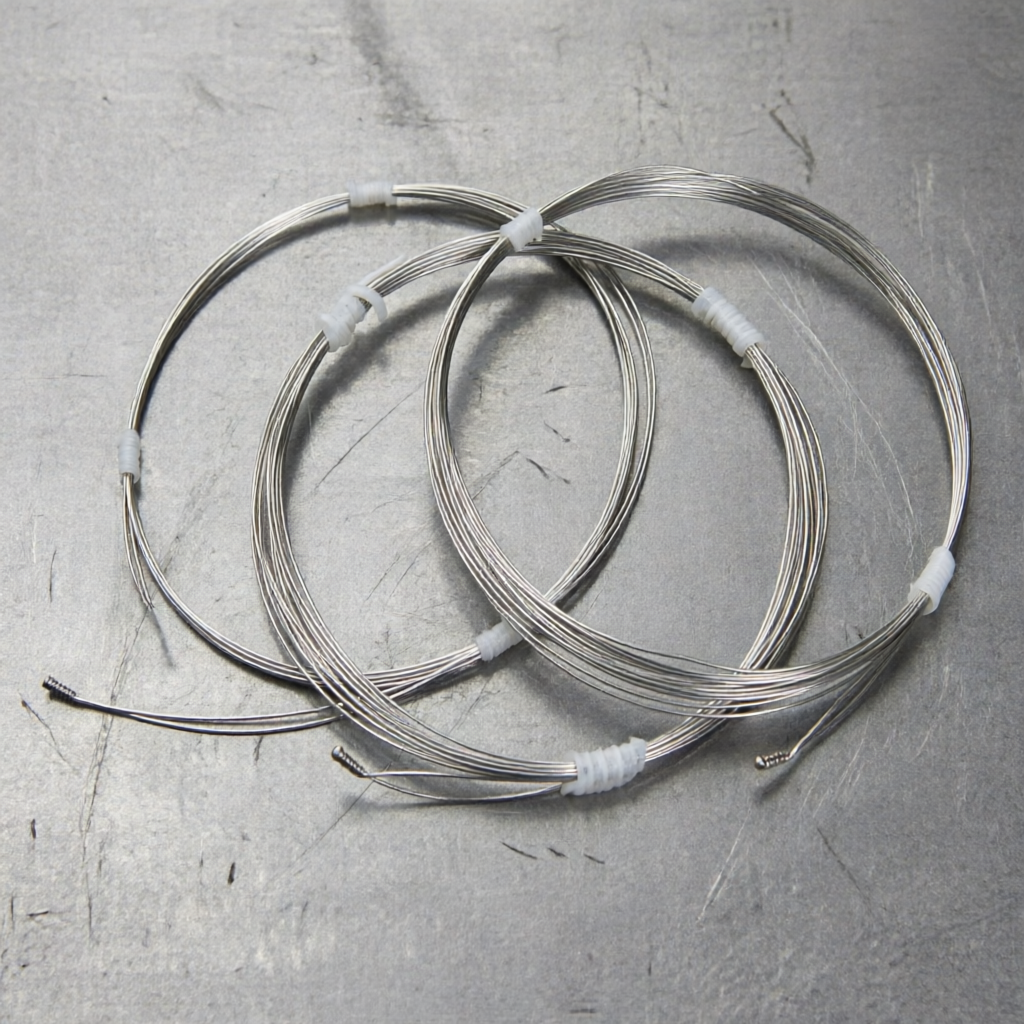
Accurate temperature measurement above 2000°C presents significant challenges in industrial and research environments. Standard thermocouple materials lose calibration stability, oxidize rapidly, or simply melt at the extreme temperatures encountered in aerospace testing, advanced materials processing, vacuum furnaces, and high-temperature research. Tungsten rhenium thermocouples, particularly the WRe 5/20 configuration, have become the standard solution for reliable temperature sensing in these demanding applications.
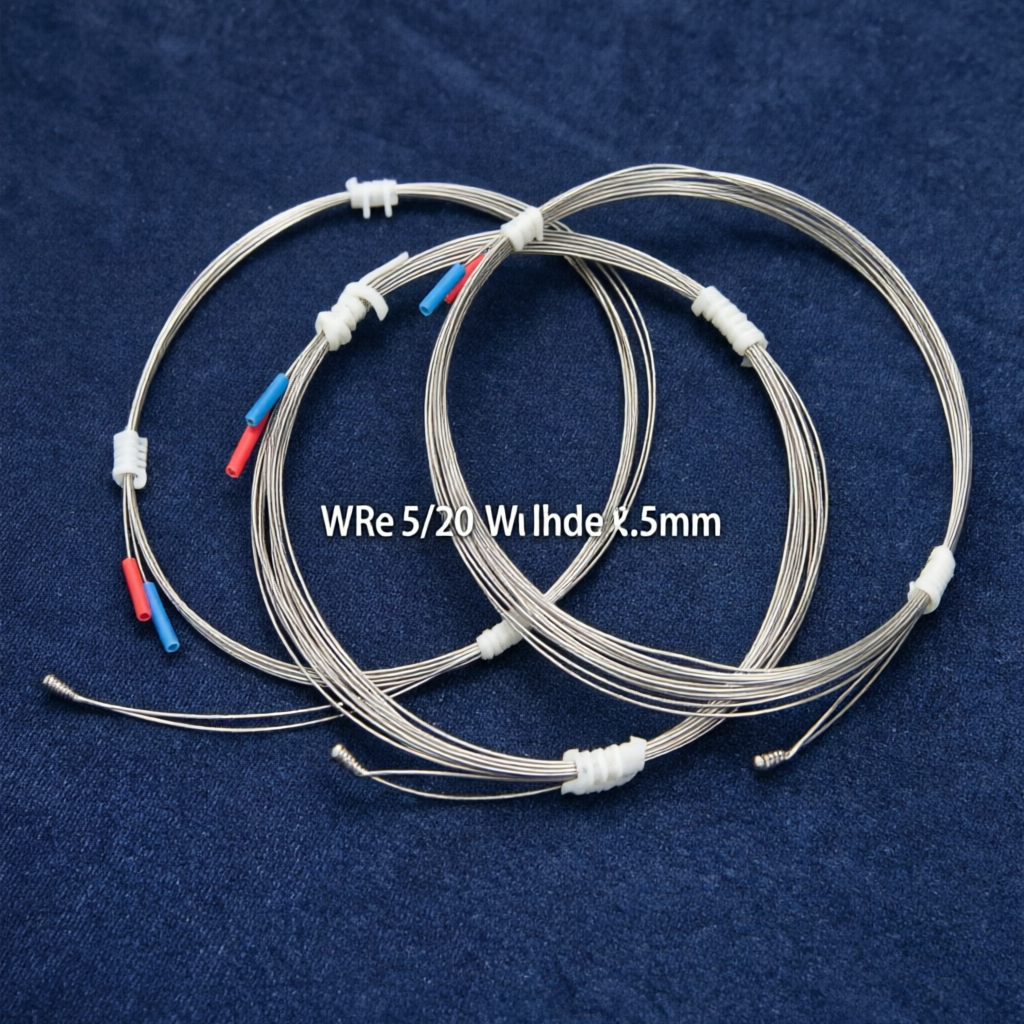
WRe 5/20 thermocouple wire consists of two dissimilar alloy legs that generate a measurable voltage when exposed to a temperature gradient. The designation refers to the rhenium content in each leg: the positive leg contains 5% rhenium with 95% tungsten (W-5%Re), while the negative leg contains 20% rhenium with 80% tungsten (W-20%Re). This specific composition balance provides optimal thermoelectric output while maintaining mechanical stability at temperatures where most other thermocouple types fail.
The addition of rhenium to tungsten serves multiple technical purposes. Rhenium increases ductility and workability compared to pure tungsten, which is notoriously brittle at room temperature. The alloying also improves oxidation resistance and reduces grain growth at elevated temperatures, helping maintain calibration stability during extended high-temperature exposure. Research has shown that the 5/20 composition offers a favorable balance between thermoelectric sensitivity (typically 10-15 μV/°C in the 1000-2500°C range) and long-term drift characteristics.
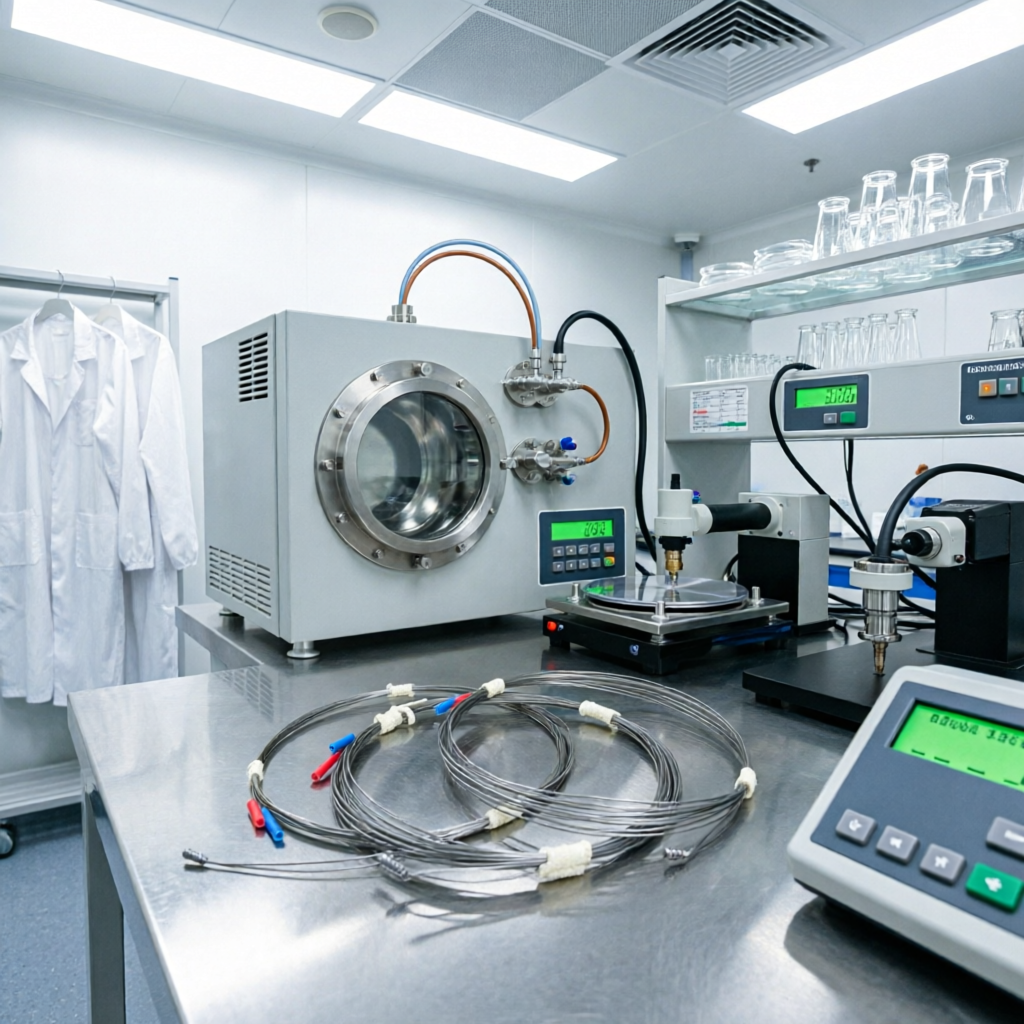
Research laboratory application context for WRe 5/20 Tungsten Rhenium Thermocouple Wire | R015
Temperature Range and Performance Characteristics
WRe 5/20 thermocouples operate reliably from approximately 0°C up to 2320°C (4208°F) in inert or vacuum atmospheres. The practical upper limit depends heavily on environmental conditions. In high vacuum (below 10⁻⁴ torr), these thermocouples can approach their maximum temperature capability with minimal degradation. In inert atmospheres such as argon or helium, operation up to 2300°C is feasible for moderate durations.
Oxidizing atmospheres severely limit performance. Even brief exposure to air above 500°C causes rapid oxidation of both tungsten and rhenium, forming volatile oxides that degrade the wire and destroy calibration. For this reason, tungsten rhenium thermocouples are almost exclusively used in vacuum furnaces, controlled atmosphere chambers, or inert gas environments.
Measurement accuracy typically ranges from ±1% of reading above 1000°C under ideal conditions. However, thermal drift becomes a significant consideration during extended use. Research indicates that drift rates of 1-3°C per 100 hours are common at temperatures above 2000°C, even in vacuum. Engineers working with these thermocouples often implement periodic recalibration protocols or use sacrificial thermocouples for critical long-duration measurements.
Key Applications in Industry and Research
Aerospace testing facilities rely heavily on tungsten rhenium thermocouples for measuring temperatures in rocket nozzles, hypersonic wind tunnels, and thermal protection system evaluation. The ability to survive brief exposures above 2000°C while maintaining reasonable accuracy makes these sensors essential for validating computational models and material performance predictions.
Advanced materials processing represents another major application area. Crystal growth systems for refractory materials, hot isostatic pressing (HIP) equipment, and sintering furnaces for ceramics and metal matrix composites frequently operate in the 1800-2300°C range where WRe 5/20 thermocouples provide the only practical temperature feedback. Researchers developing ultra-high temperature ceramics (UHTCs) and refractory metal alloys depend on these sensors for process control and material characterization.
Vacuum furnace manufacturers integrate tungsten rhenium thermocouples into high-temperature heat treating systems, particularly for processing molybdenum, tantalum, and tungsten components. The vacuum environment protects the thermocouple from oxidation while allowing accurate temperature control during brazing, annealing, and stress relief operations above 2000°C.
Nuclear materials research facilities use these thermocouples in fuel testing reactors and post-irradiation examination equipment where high temperatures and controlled atmospheres are required. The relatively low neutron cross-section of tungsten makes these sensors more suitable than some alternatives in radiation environments.
Wire Specifications and Selection Factors
Tungsten rhenium thermocouple wire is typically available in diameters ranging from 0.010 inches (0.25 mm) to 0.040 inches (1.0 mm). Finer wire diameters offer faster thermal response and less thermal mass, making them preferable for transient measurements or small-scale applications. However, fine wire is more fragile and prone to breakage during installation and use. Heavier gauge wire provides better mechanical durability and longer service life in industrial furnaces but responds more slowly to temperature changes.
Wire purity significantly affects performance and cost. Standard industrial-grade wire typically contains 99.9% pure base metals, which is adequate for most furnace control applications. Research-grade wire with 99.95% or higher purity offers improved stability and lower drift rates, justifying the higher cost in precision measurement applications or extended-duration experiments.
Insulation selection depends on the operating environment and temperature range. Bare wire is common in vacuum applications where electrical isolation is achieved through ceramic standoffs or insulators. For applications requiring continuous insulation, high-purity alumina or beryllia ceramic beads are threaded onto the wire. Dual-bore ceramic tubes provide better protection and easier handling. Tantalum or molybdenum sheathed assemblies offer maximum protection in harsh environments but add thermal mass and cost.
Installation and Measurement Considerations
Proper installation is critical for accurate measurements. The measuring junction is typically formed by welding the two wire legs together using capacitive discharge, laser, or electron beam welding techniques. Mechanical twisting or crimping is inadequate at high temperatures due to contact resistance changes and junction degradation.
Cold junction compensation requires careful attention. The reference junction must be maintained at a known, stable temperature, typically 0°C using an ice bath or electronic reference junction compensator. Extension wire from the hot zone to the reference junction should be the same alloy composition as the thermocouple legs to avoid introducing additional thermoelectric junctions that create measurement errors.
Electrical noise and ground loops can compromise measurement accuracy, particularly with the relatively low thermoelectric output of tungsten rhenium thermocouples. Shielded extension cables, proper grounding practices, and high-impedance measurement instrumentation help minimize these issues. Many researchers use specialized high-temperature potentiometers or data acquisition systems designed specifically for refractory metal thermocouples.
Limitations and Common Challenges
Brittleness at room temperature makes tungsten rhenium wire difficult to handle and install. The wire can fracture during bending or vibration, particularly in smaller diameters. Careful handling procedures and strain relief provisions are essential during installation.
Contamination from furnace atmospheres or nearby materials can alter thermocouple calibration. Carbon contamination is particularly problematic, as tungsten forms carbides that change the thermoelectric properties. Researchers working with graphite furnaces or carbon-containing atmospheres must take precautions to isolate thermocouples from carbon sources.
Grain growth and recrystallization occur during high-temperature exposure, gradually changing the wire’s microstructure and thermoelectric characteristics. This metallurgical evolution is the primary cause of long-term drift. While unavoidable, its effects can be minimized by limiting peak temperatures and exposure duration when possible.
Cost remains a significant consideration. Rhenium is one of the rarest elements in the Earth’s crust, and its price fluctuates based on mining production and industrial demand. Tungsten rhenium thermocouple wire typically costs 10-50 times more than common base metal thermocouples, making it economically viable only where its unique high-temperature capability is essential.
Current Research and Development Trends
Materials scientists continue investigating alternative rhenium concentrations and ternary alloy additions to improve performance. Some research groups are exploring tungsten-rhenium-hafnium and tungsten-rhenium-molybdenum systems seeking better oxidation resistance or reduced drift rates. However, the WRe 5/20 composition remains the industry standard due to its well-characterized behavior and commercial availability.
Thin-film thermocouple research is exploring vapor-deposited tungsten rhenium junctions for surface temperature measurements on turbine blades and other aerospace components. These sensors offer minimal thermal mass and fast response times but face challenges with adhesion, stability, and electrical isolation at extreme temperatures.
Advanced manufacturing techniques including additive manufacturing and powder metallurgy are being investigated for producing more uniform wire with controlled grain structures. Improved microstructural control could potentially reduce drift rates and extend calibration intervals.
Practical Sourcing Considerations
Engineers and researchers sourcing tungsten rhenium thermocouple wire should verify wire diameter tolerances, purity specifications, and surface condition. Wire should be supplied clean and free from drawing lubricants or surface contamination that could affect high-temperature performance.
Lead times can be significant due to the specialized nature of these materials. Planning ahead for critical applications and maintaining appropriate inventory levels helps avoid project delays. Some suppliers offer matched pairs of wire with documented thermoelectric characteristics, which can be valuable for precision measurement applications.
Calibration data and traceability documentation are important for quality-critical applications. Reputable suppliers can provide material certifications and, in some cases, calibration curves traceable to national standards.
Conclusion
WRe 5/20 tungsten rhenium thermocouple wire remains the most reliable solution for temperature measurement above 2000°C in vacuum and inert atmosphere applications. While these sensors present challenges including brittleness, oxidation sensitivity, and high cost, their unique capability to operate at temperatures where other measurement technologies fail makes them indispensable in aerospace testing, advanced materials processing, and high-temperature research. Understanding the material’s characteristics, limitations, and proper application techniques enables engineers to achieve accurate, reliable temperature measurements in the most demanding thermal environments.
WRe 5/20 Tungsten Rhenium Thermocouple Wire
For high-temperature measurement applications requiring reliable performance above 2000°C, WRe 5/20 tungsten rhenium thermocouple wire is available for vacuum furnaces, aerospace testing, and advanced materials research.