Abstract
Aluminum hexaboride (AlB6) represents a promising class of materials that bridges the gap between ultra-hard coatings and advanced semiconductor applications. This comprehensive review examines the optimization strategies for AlB6 thin film deposition, focusing on magnetron sputtering techniques, process parameter optimization, and characterization methods. We discuss the unique properties of AlB6 that make it suitable for both wear-resistant coatings and semiconductor devices, including its exceptional hardness, thermal stability, and tunable electronic properties. Through systematic analysis of deposition parameters, substrate treatments, and post-deposition processing, we provide a roadmap for researchers to optimize AlB6 thin films for specific applications in hard coatings and semiconductor research.
Table of Contents
- What is AlB6 and Its Applications
- Material Properties and Applications
- Deposition Techniques
- Optimization Strategies
- Characterization and Quality Assessment
- Challenges and Solutions
- Advanced Optimization Techniques
- Applications-Specific Optimization
- Future Directions
- Conclusion
- References
1. What is AlB6 and Its Applications
Aluminum boride compounds, particularly AlB6 and related ternary borides like AlMgB14, have emerged as materials of significant interest due to their exceptional combination of mechanical and electronic properties [1]. The extreme hardness of these materials (reported up to 46 GPa for AlMgB14 with additives) makes them ideal candidates for wear-resistant coatings, while their tunable electronic properties open possibilities for semiconductor applications [2]. The optimization of AlB6 thin film deposition requires careful consideration of multiple interdependent parameters, including deposition technique, process conditions, substrate preparation, and post-deposition treatments.
2. Material Properties and Applications
2.1 Hard Coating Applications
Aluminum boride thin films exhibit remarkable hardness characteristics that rival or exceed traditional hard coating materials. AlMgB14-based materials demonstrate hardness values ranging from 35 to 46 GPa, comparable to cubic boron nitride [3]. This exceptional hardness, combined with low density and high thermal stability, makes AlB6-based thin films ideal for protective coatings in cutting tools, microelectromechanical systems (MEMS), and aerospace applications [4].
Crystal Structure: The unique crystal structure of AlB6, featuring boron icosahedra interconnected through aluminum atoms, provides the structural basis for its mechanical robustness.
2.2 Semiconductor Applications
Beyond mechanical applications, AlB6 thin films show promise in semiconductor technology due to their tunable electronic properties. The boron-rich nature of these materials provides opportunities for bandgap engineering and controlled doping. Research indicates that aluminum boride thin films can be engineered to exhibit specific electronic characteristics suitable for various semiconductor applications, including potential use in thermoelectric devices and specialized electronic components [5].
3. Deposition Techniques
3.1 Magnetron Sputtering
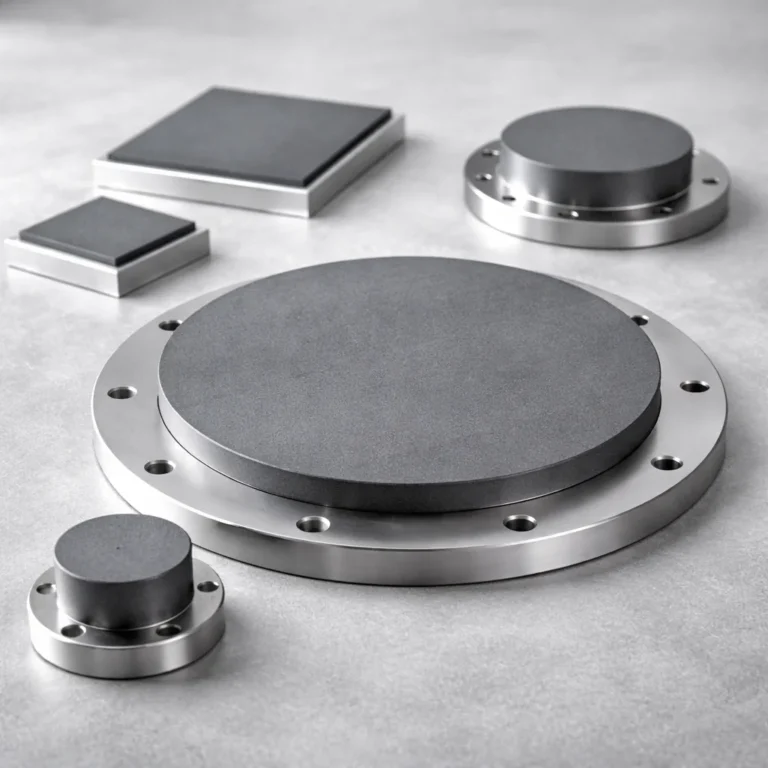
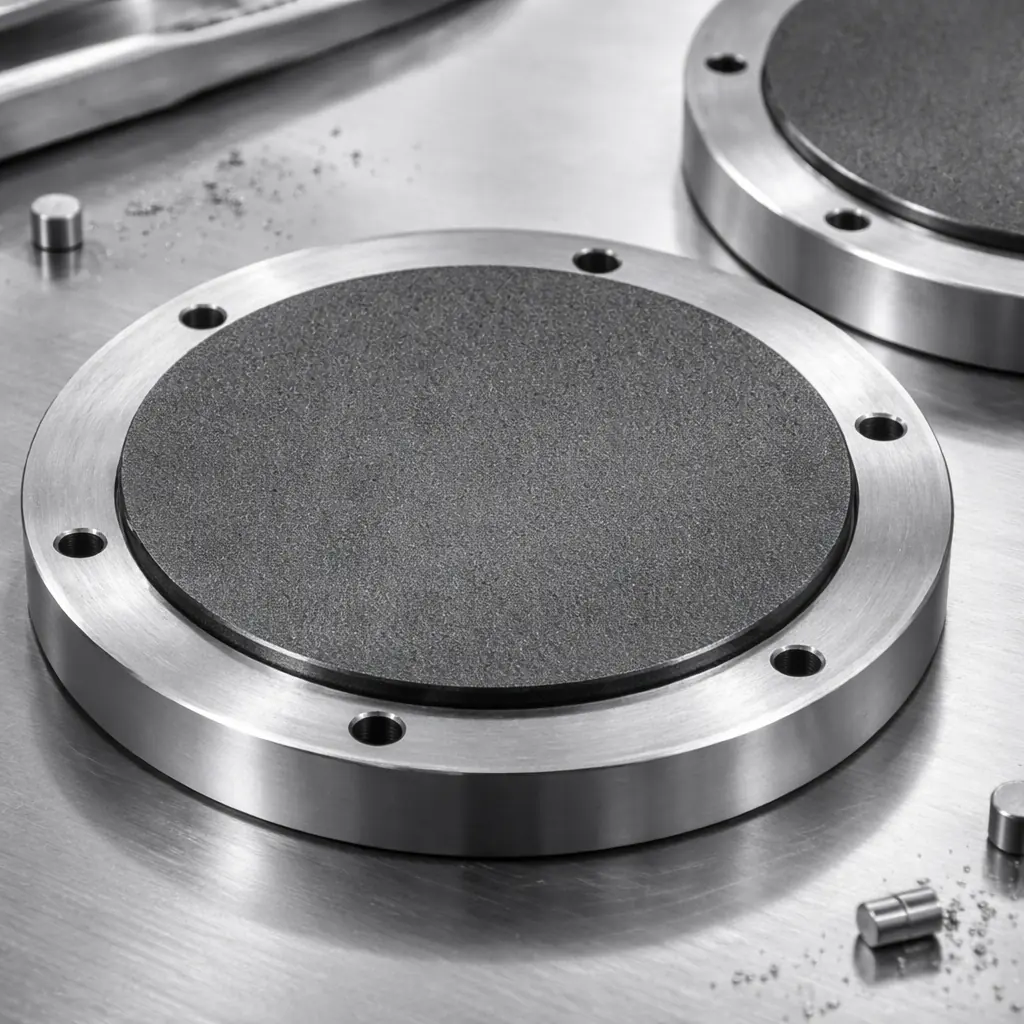
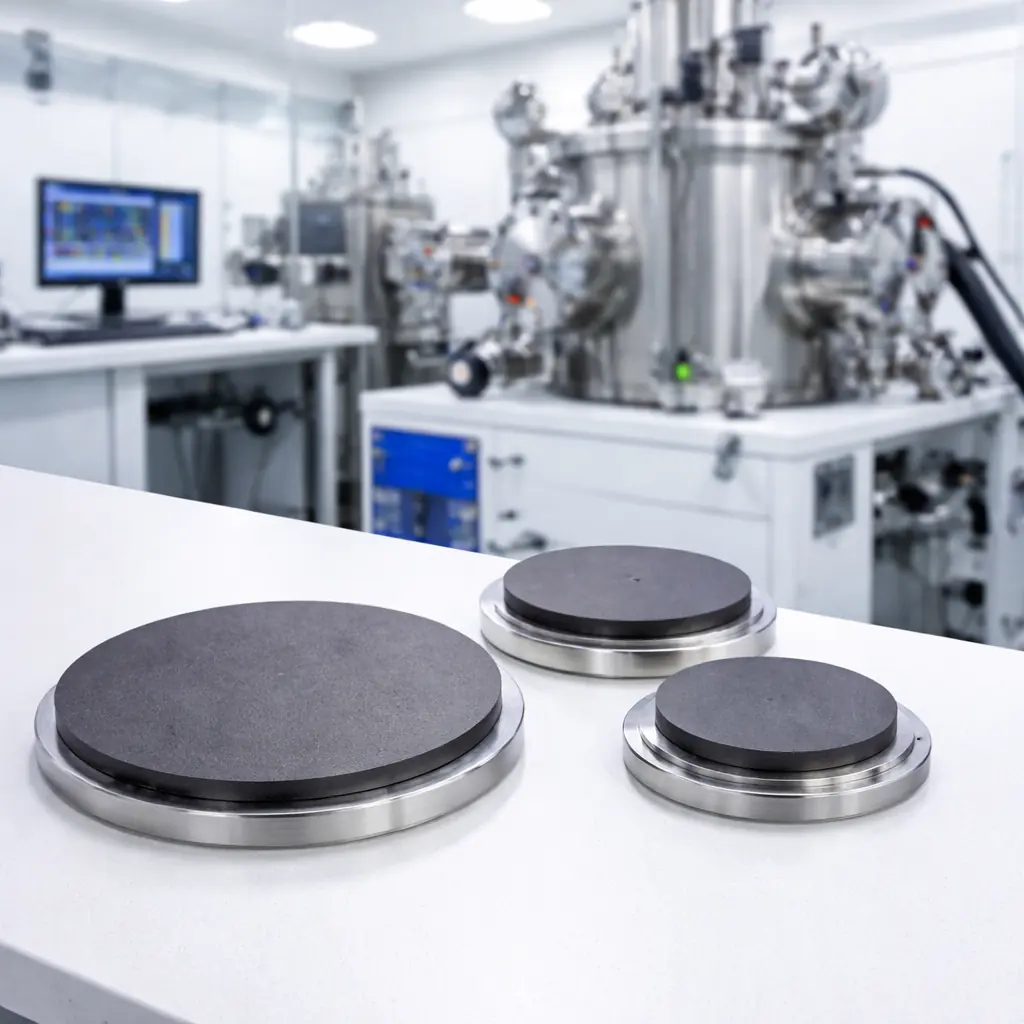
Magnetron sputtering has emerged as the primary technique for depositing high-quality AlB6 thin films. This physical vapor deposition method offers excellent control over film composition, thickness, and microstructure. The process involves bombarding a target material (typically AlB6 or composite targets) with energetic ions in a vacuum chamber, causing atoms to be ejected and deposited onto a substrate [6].
Key advantages of magnetron sputtering for AlB6 deposition:
- Precise control over film stoichiometry
- Good adhesion to various substrates
- Scalability for industrial applications
- Ability to deposit at relatively low temperatures
3.2 Process Parameter Optimization
Optimizing AlB6 thin film deposition requires systematic investigation of multiple process parameters. Research has identified several critical factors that significantly influence film properties:
| Parameter | Typical Range | Effect on Film |
|---|---|---|
| Sputtering power | 50-200 W | Affects deposition rate, film stress, and adhesion [7] |
| Substrate temperature | 200-500°C | Influences crystallinity, stress, and adhesion [8] |
| Working pressure | 0.5-5 Pa | Affects film density and microstructure |
| Target-to-substrate distance | 50-100 mm | Balances deposition rate with film quality |
| Bias voltage | Variable | Enhances density and adhesion through ion bombardment |
4. Optimization Strategies
4.1 Design of Experiments (DoE) Approach
Systematic optimization of AlB6 thin film deposition benefits significantly from statistical design of experiments methodologies. Response Surface Methodology (RSM) and other DoE techniques allow efficient exploration of parameter space and identification of optimal conditions [8].
Key steps in DoE optimization:
- Factor screening: Identify critical process parameters affecting film properties
- Response surface modeling: Develop mathematical models relating parameters to film characteristics
- Optimization: Determine parameter combinations that maximize desired properties
- Verification: Confirm optimized conditions through experimental validation
4.2 Multi-Target Sputtering Systems
For complex AlB6-based compositions, multi-target magnetron sputtering systems offer advantages in controlling film stoichiometry. By using separate aluminum and boron targets (or composite targets), researchers can precisely tune the Al:B ratio to achieve specific properties [1].
5. Characterization and Quality Assessment
5.1 Structural Characterization
X-ray diffraction (XRD) remains essential for determining film crystallinity, phase composition, and preferred orientation. For AlB6 thin films, XRD analysis helps identify the formation of desired phases and detect potential impurities or secondary phases.
5.2 Mechanical Properties Evaluation
Nanoindentation testing provides quantitative measurements of hardness and elastic modulus. For optimized AlB6 thin films, hardness values exceeding 30 GPa have been reported, with elastic moduli typically in the range of 300-400 GPa [4].
5.3 Surface Morphology Analysis
Atomic force microscopy (AFM) and scanning electron microscopy (SEM) reveal surface roughness, grain structure, and film uniformity. Smooth surfaces with controlled roughness are particularly important for semiconductor applications.
5.4 Compositional Analysis
Techniques such as:
- Energy-dispersive X-ray spectroscopy (EDS)
- X-ray photoelectron spectroscopy (XPS)
- Glow discharge optical emission spectroscopy (GD-OES)
provide detailed information about film composition and chemical bonding states.
6. Challenges and Solutions
6.1 Stoichiometry Control
Maintaining precise Al:B stoichiometry presents a significant challenge due to differences in sputtering yields and volatility of the elements.
Solutions:
- Using composite targets with optimized compositions
- Implementing co-sputtering from multiple targets
- Adjusting power ratios in multi-target systems
- Monitoring deposition rates with in-situ quartz crystal microbalances
6.2 Film Stress Management
Residual stress in AlB6 thin films can affect adhesion and mechanical stability.
Strategies for stress control:
- Optimizing deposition temperature
- Implementing substrate bias control
- Using intermediate adhesion layers
- Post-deposition annealing treatments
6.3 Adhesion Enhancement
Poor film-substrate adhesion remains a common issue.
Improvement approaches:
- Substrate surface pretreatment (cleaning, etching)
- Deposition of adhesion-promoting interlayers
- Optimization of deposition parameters to enhance interfacial bonding
- Post-deposition thermal treatments to promote interdiffusion
7. Advanced Optimization Techniques
7.1 Machine Learning Approaches
Recent advances in machine learning offer new opportunities for optimizing thin film deposition processes. Bayesian optimization and other ML techniques can efficiently navigate complex parameter spaces and identify optimal conditions with fewer experimental iterations [7].
7.2 In-situ Monitoring and Control
Real-time monitoring techniques enable dynamic process control:
- Optical emission spectroscopy
- Mass spectrometry
- Ellipsometry
7.3 Hybrid Deposition Methods
Combining magnetron sputtering with other techniques, such as:
- Plasma-enhanced chemical vapor deposition (PECVD)
- Atomic layer deposition (ALD)
can produce films with enhanced properties through controlled layering or graded compositions.
8. Applications-Specific Optimization
8.1 Hard Coating Optimization
For wear-resistant applications, optimization focuses on:
- Maximizing hardness, toughness, and adhesion
- Minimizing friction coefficients
- Achieving high density and low porosity
- Optimizing grain size and microstructure
- Incorporating lubricious phases or additives
- Ensuring good thermal stability for high-temperature applications
8.2 Semiconductor Device Optimization
For electronic applications, optimization priorities shift toward:
- Controlling electrical conductivity and carrier mobility
- Achieving specific bandgap characteristics
- Minimizing interface states and defects
- Ensuring compatibility with semiconductor processing temperatures
9. Future Directions
9.1 Nanostructured and Nanocomposite Films
Future optimization efforts will likely focus on nanostructured AlB6 thin films, including nanocomposites with other hard materials (TiB2, BN) or lubricious phases (MoS2, graphite). These advanced architectures offer potential for further enhancement of mechanical and tribological properties.
9.2 High-Throughput Combinatorial Approaches
Combinatorial materials science approaches, involving deposition of compositionally graded films on single substrates, enable rapid screening of optimal compositions and processing conditions.
9.3 Integration with Semiconductor Manufacturing
As AlB6 thin films gain traction in semiconductor applications, optimization efforts must address compatibility with existing semiconductor manufacturing processes, including:
- Thermal budget constraints
- Contamination control
- Integration with other device layers
10. Conclusion
Optimizing AlB6 thin film deposition for hard coating and semiconductor applications requires a multifaceted approach that balances mechanical, structural, and electronic properties. Through systematic optimization of deposition parameters, implementation of advanced characterization techniques, and application of statistical design methodologies, researchers can tailor AlB6 thin films to meet specific application requirements.
The continued development of these optimization strategies will enable broader adoption of AlB6-based thin films in both industrial hard coating applications and advanced semiconductor technologies.
Engineers and researchers interested in aluminum boride sputtering targets can find detailed specifications and ordering information through specialized materials suppliers. AlB6 sputtering targets are available from AtoZmat in various sizes and configurations for research and production applications.
AtoZmat —— Advanced Materials from A to Z.
11. References
[1] Liu, W.; Meng, Q. S.; Miao, Y.; Chen, F. H.; Hu, L. F. Preparation and Characterization of Al-Mg-B Thin Films by Magnetron Sputtering. Advanced Materials Research 2012, 465, 112–117. DOI: 10.4028/www.scientific.net/amr.465.112
[2] Wu, Z.; Bai, Y.; Qu, W.; Wu, A.; Zhang, D.; Zhao, J.; Jiang, X. Al–Mg–B Thin Films Prepared by Magnetron Sputtering. Vacuum 2010, 85 (4), 541–545. DOI: 10.1016/j.vacuum.2010.09.004
[3] Cook, B. A.; Harringa, J. L.; Lewis, T. L.; Russell, A. M. A New Class of Ultra-Hard Materials Based on AlMgB14. Scripta Materialia 2000, 42 (6), 597–602. DOI: 10.1016/s1359-6462(99)00400-5
[4] Euchner, H.; Mayrhofer, P. H. Designing Thin Film Materials — Ternary Borides from First Principles. Thin Solid Films 2015, 583, 46–49. DOI: 10.1016/j.tsf.2015.03.035
[5] Golikova, O. A.; Kazanin, M. M.; Mirzazhonov, Z.; Khomidov, T.; Shiyanov, Yu. A. Films of Aluminium Boride (AlB10). In AIP Conference Proceedings; AIP, 1991; Vol. 231, pp 117–120. DOI: 10.1063/1.40882
[6] Ma, D. L.; Liu, H. Y.; Deng, Q. Y.; Yang, W. M.; Silins, K.; Huang, N.; Leng, Y. X. Optimal Target Sputtering Mode for Aluminum Nitride Thin Film Deposition by High Power Pulsed Magnetron Sputtering. Vacuum 2019, 160, 410–417. DOI: 10.1016/j.vacuum.2018.11.058
[7] Knappe, S.; Elster, C.; Koch, H. Optimization of Niobium Thin Films by Experimental Design. Journal of Vacuum Science & Technology A: Vacuum, Surfaces, and Films 1997, 15 (4), 2158–2166. DOI: 10.1116/1.580528
[8] Pinheiro, X. L.; Vilanova, A.; Mesquita, D.; Monteiro, M.; Eriksson, J. A. M.; Barbosa, J. R. S.; Matos, C.; Oliveira, A. J. N.; Oliveira, K.; Capitão, J.; Loureiro, E.; Fernandes, P. A.; Mendes, A.; Salomé, P. M. P. Design of Experiments Optimization of Fluorine-Doped Tin Oxide Films Prepared by Spray Pyrolysis for Photovoltaic Applications. Ceramics International 2023, 49 (8), 13019–13030. DOI: 10.1016/j.ceramint.2022.12.175